When your C.H.I. overhead door starts acting up, the first instinct for many homeowners is to either ignore it and hope it goes away or jump straight into taking things apart. Neither approach works out well. The smarter path is somewhere in the middle. Know what to look for, understand what you can safely address yourself, and recognize clearly when it is time to step back and call for professional garage door repair.
This guide walks you through a practical, step-by-step approach to handling the most common C.H.I. overhead door problems. It is written for homeowners in Kingston, NH, who want to be informed and proactive without putting themselves at risk. You do not need to be a technician to follow this. You just need to know what to look for, what to do first, and where the line is between a homeowner task and a professional one.
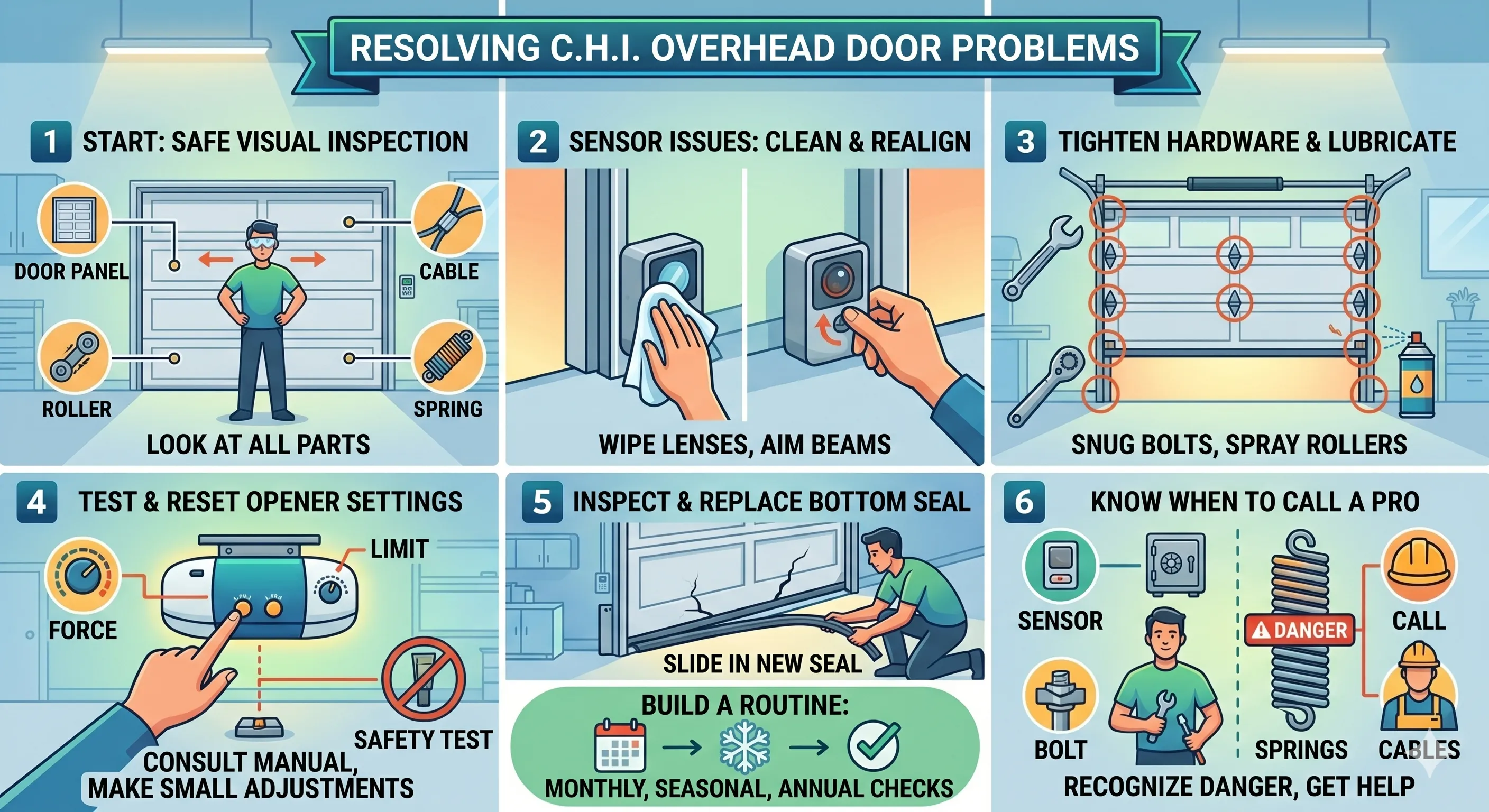
Start With a Safe and Thorough Visual Inspection
Before doing anything else, take a few minutes to look at your door carefully. A visual inspection is the fastest way to identify what is actually going on without touching anything that could be under tension or load.
How to do a proper visual inspection:
- Stand inside the garage with the door closed and look at the full system from side to side.
- Check the springs above the door for any visible breaks, gaps, or unusual positioning.
- Look at the cables on both sides. They should be taut, evenly wound, and free of fraying.
- Inspect the rollers inside the tracks. Look for cracked, chipped, or missing rollers.
- Check the tracks on both sides for bends, dents, or gaps between the rollers and the track wall.
- Look at the bottom seal along the floor line. Check for tears, compression damage, or gaps.
- Look at the panels for dents, rust spots, or sections that appear bowed or misaligned.
What to do with what you find:
- If you see a broken spring or a frayed cable, stop. Do not attempt to operate the door or handle those components. These require a professional.
- If you see loose bolts, dirty sensors, or a worn seal, those are items you can safely address yourself.
- Take photos or a short video of anything that looks off. This helps when describing the problem to a technician.
- Understanding what triggers door problems in the first place is covered in What Are the Most Common C.H.I. Overhead Doors Issues?, which explains the full range of issues that lead homeowners to call for repairs.
Address Sensor Issues Before Assuming Something Is Broken
One of the most common calls technicians receive turns out to be a sensor problem, not a mechanical failure. The photo-eye sensors near the base of the door frame are designed to stop the door from closing if anything interrupts the beam between them. When they are dirty, misaligned, or blocked, the door will refuse to close completely.
Before concluding that something is mechanically wrong with your C.H.I. door, check the sensors first.
Steps to inspect and address sensor issues:
- Look at both sensors. Each one should have a small indicator light. One sends the beam, the other receives it. If the receiving sensor light is off or blinking, the beam is interrupted.
- Wipe both sensor lenses gently with a clean, dry cloth. Dust, dirt, and cobwebs are frequent culprits.
- Check that both sensors are aimed directly at each other. Even a slight bump can knock one out of alignment.
- Remove any objects, debris, or obstructions within the sensor path along the floor.
- Check the wiring running from each sensor up to the motor unit. Look for any visible cuts, pinches, or disconnected sections.
What should resolve it:
- Cleaning the lenses and realigning the sensors resolves the issue in the majority of cases.
- If the lights return to steady and the door operates normally, the problem is solved.
- If the sensors look clean and aligned but the door still will not close, the wiring or the sensor unit itself may need replacement by a technician.
Tighten Hardware and Lubricate Moving Parts
Over time, the vibration from thousands of open and closed cycles loosens the hardware on your C.H.I. door. Bolts, nuts, and bracket fasteners gradually work themselves loose. At the same time, rollers, hinges, and springs dry out and create friction that accelerates wear. Both of these are straightforward homeowner tasks that make a noticeable difference in how the door operates.
Hardware tightening steps:
- Use a socket wrench to check and tighten all visible bolts on the track mounting brackets, roller brackets, and hinge plates.
- Do not overtighten. Snug is enough. Overtightening can strip the hardware or crack a bracket.
- Check the bolts that attach the opener rail to the header bracket above the door. These loosen frequently and are often overlooked.
- Look at the lag screws anchoring the track brackets to the wall and ceiling. Tighten any that have worked loose.
Lubrication steps:
- Use a silicone-based or lithium-based garage door lubricant. Do not use WD-40 as a substitute. It is a solvent, not a lubricant, and will dry out rubber components over time.
- Apply lubricant to the hinges, rollers, and the torsion spring above the door.
- Wipe away any excess to prevent buildup on the track.
- Do not lubricate the track itself. A clean, dry track is correct. Lubricant on the track causes the rollers to slip rather than roll.
- Repeat this process every three to six months as part of your regular garage door maintenance routine.
Test and Reset the Opener Settings
Many C.H.I. overhead door problems that seem mechanical are actually related to the opener’s settings being out of adjustment. Limit settings control how far the door travels in each direction. Force settings control how much resistance the motor applies before stopping or reversing. When either is off, the door may not open or close fully, may reverse unexpectedly, or may strain noticeably during operation.
How to check and adjust opener settings:
- Consult the manual for your specific garage door opener model. Most have clearly labeled adjustment screws or digital controls for limit and force settings.
- If the door does not close fully and stops short of the ground, the close limit needs to be increased slightly.
- If the door opens and then immediately starts to come back down, the open limit may be set too high.
- If the door reverses before reaching the ground without contacting anything, the closing force may be set too sensitively.
- Make small adjustments, one step at a time, and test after each change.
Safety checks that should always follow an adjustment:
- After changing any force setting, place a flat object on the ground in the door’s path and run a closed cycle. The door must stop and reverse on contact. If it does not, the force is set too high and must be reduced immediately.
When to stop and call a technician:
- If adjustments do not resolve the issue, or if the opener is older and you cannot locate the manual or controls, a technician can recalibrate the unit properly without risk of damage.
Inspect and Replace the Bottom Seal
The bottom seal on your C.H.I. door takes a beating, especially through Kingston winters. It contacts the ground on every close cycle, gets compressed repeatedly, and is exposed to road salt, moisture, ice, and UV exposure year-round. When it deteriorates, it allows cold air, water, and pests into the garage and can create ice buildup that strains the door when it tries to open.
How to inspect the bottom seal:
- With the door closed, look along the base from inside the garage. You should not see any daylight or gaps between the seal and the floor.
- Check the seal for cracks, tears, flattened sections, or areas where it has pulled away from the door frame.
- Run your hand along the seal on a cold day. If you feel a draft, it needs replacement.
How to replace it:
- Bottom seals typically slide into a channel along the base of the door. Most homeowners can replace them without professional help.
- Measure the width of your door before purchasing a replacement. Bring a photo of the existing channel profile to ensure you get the correct seal type.
- Slide the old seal out from one end of the channel, clean the channel, and slide the new seal in.
- Trim any excess length with a utility blade and confirm a complete seal when the door is fully closed.
Know Exactly When to Step Back and Call a Professional
This is the most important section in this entire guide. There are tasks a homeowner can and should handle. There are others that must be left to a qualified technician. Knowing the difference keeps you safe and prevents minor problems from becoming expensive ones.
Tasks that are safe for homeowners:
- Cleaning and realigning sensors.
- Tightening loose hardware with basic hand tools.
- Applying lubricant to hinges, rollers, and springs.
- Replace the bottom seal.
- Changing remote batteries and reprogramming remotes.
- Adjust the opener limit and force settings according to the manufacturer’s instructions.
Tasks that must be handled by a professional:
- Spring replacement or adjustment of any kind. Torsion and extension springs are under extreme tension and can cause severe injury if mishandled.
- Cable replacement or adjustment. Cables are under load and connected to the spring system.
- Track realignment beyond simple visual adjustments.
- Opener motor unit replacement or full system rewiring.
- Structural panel replacement that requires the disassembly of the door sections.
- Any repair where the door cannot be operated safely in its current condition.
The International Door Association explains how homeowners can handle some safety and maintenance tasks themselves while leaving higher-risk repairs to trained technicians, which makes that line much clearer.
For context on what tends to drive these problems in the first place, Why Your C.H.I. Overhead Door Keeps Breaking Down walks through the root causes that lead to the situations covered in this guide.
Build a Proactive Inspection Routine That Prevents Future Problems
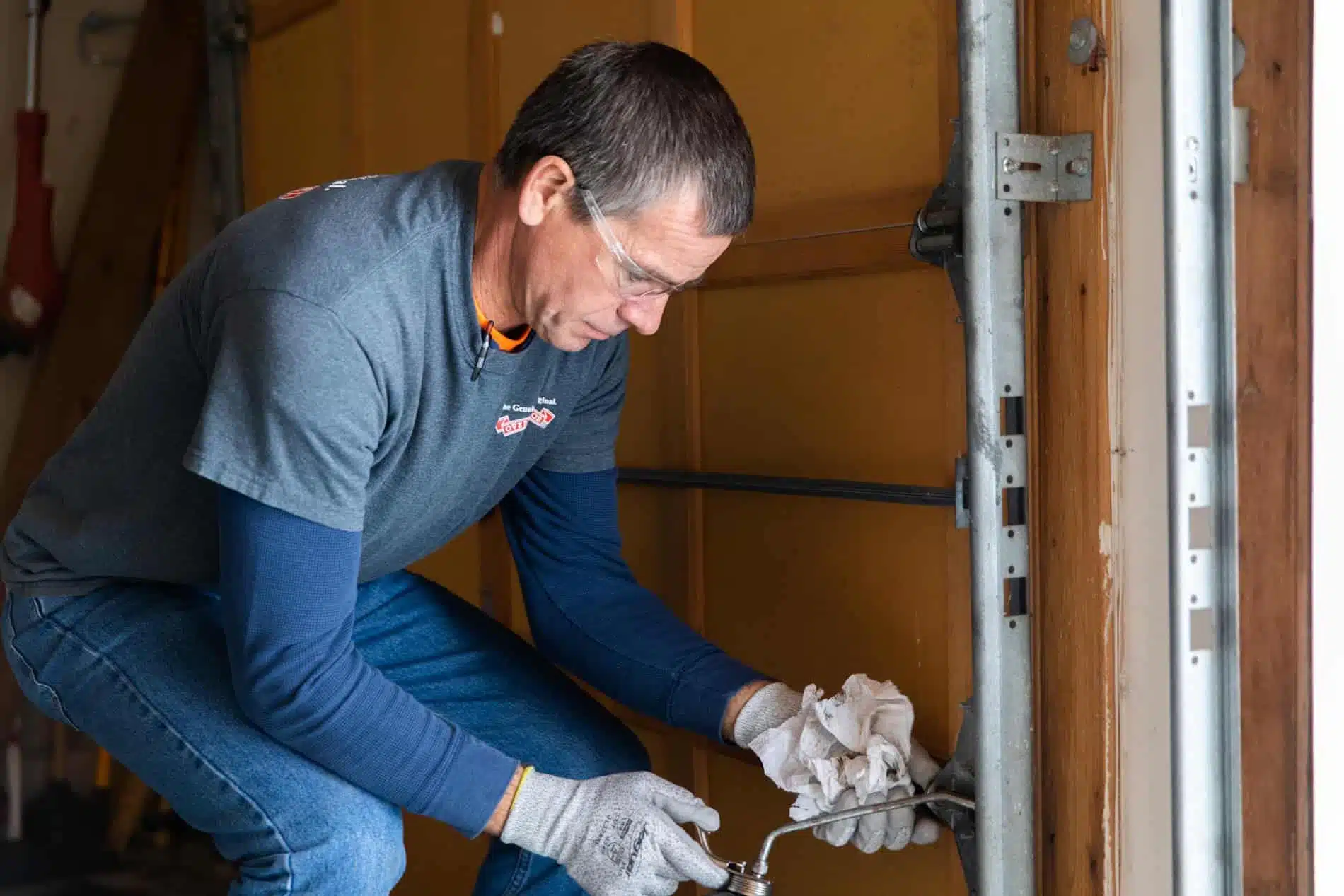
The best way to avoid C.H.I. overhead door problems is to catch them early. A simple, consistent routine keeps your door running reliably year-round and reduces the need for emergency service calls.
A practical maintenance schedule for Kingston, NH homeowners:
- Monthly: Listen for new sounds during operation, wipe the sensors clean, and clear any debris from the track area.
- Every 3 to 6 months: Lubricate all moving parts, tighten hardware, inspect the bottom seal, and do a manual balance test.
- Annually: Book a professional tune-up to assess springs, cables, rollers, and opener performance.
- Before winter: Apply fresh lubricant, check the bottom seal, and confirm your opener’s backup battery is charged.
DASMA safety tips recommend monthly checks and an annual visit from a trained door systems technician, which aligns closely with a proactive inspection routine like this one.
And when it comes to deciding whether a problem you have found calls for a repair or a full replacement, When Should You Repair or Replace Your C.H.I. Overhead Door? gives you a clear framework for making that call.
Handling Problems the Right Way Starts With Being Informed
Resolving C.H.I. overhead door problems does not require professional-level skills for every situation. What it does require is knowing what you are looking at, understanding what is safe to handle yourself, and acting early before small issues become costly ones. The homeowners who stay ahead of garage door problems are the ones who make the time to look, listen, and respond rather than wait.
If you are in Kingston, NH, and dealing with a C.H.I. overhead door issue that goes beyond what a homeowner should handle, Aloha Garage Doors is ready to help. Our experienced technicians can diagnose the problem quickly, explain your options clearly, and get your door back to reliable operation. Contact us today or give us a call to schedule a service visit and get it handled the right way.