If your C.H.I. overhead door seems to break down more often than it should, you are not alone. Many homeowners in Kingston, NH, deal with the same frustration. The door works fine for a while, then something fails again. A spring here, a roller there, and before long, it feels like a never-ending cycle of garage door repair calls.
The thing is, most recurring garage door failures do not happen randomly. There are real, identifiable reasons behind them. Understanding those reasons is the first step toward stopping the pattern for good. This guide breaks down exactly why C.H.I. overhead doors fail repeatedly, what conditions make them worse, and what you can do to get ahead of the problem before it costs you again.
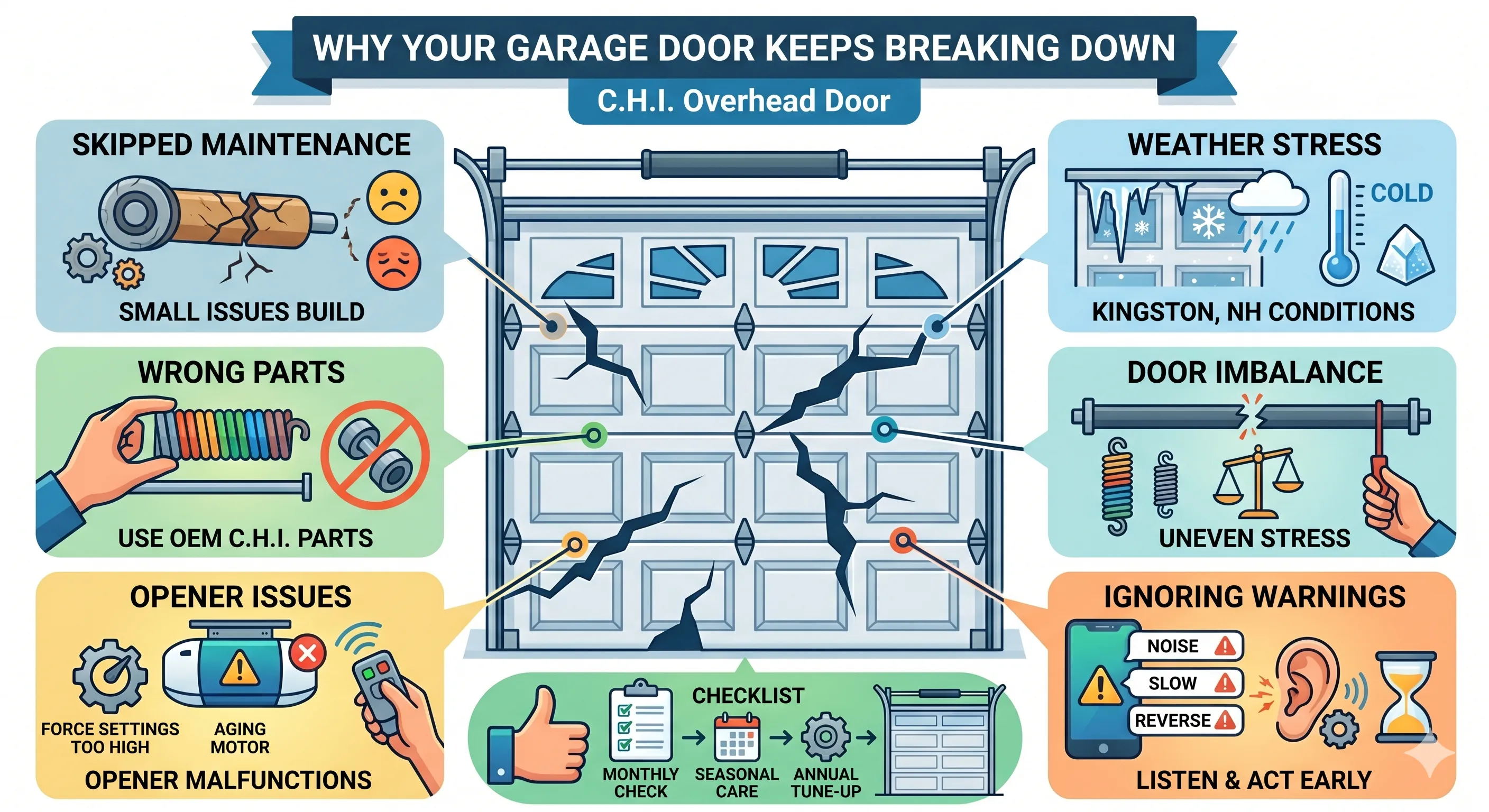
Skipping Regular Maintenance Is the Number One Cause
Ask any experienced garage door technician what causes most repeat breakdowns, and the answer is almost always the same. Lack of maintenance. A C.H.I. overhead door has dozens of moving parts, and every single one of them needs periodic attention to stay in good working condition.
When garage door maintenance gets skipped, small issues build quietly over time. Rollers dry out and crack. Hinges wear unevenly. Springs fatigue faster than they should. By the time a homeowner notices something is wrong, several components may already be failing together.
What actually happens when maintenance is skipped:
- Metal-on-metal friction accelerates wear on rollers and tracks.
- Springs lose their tension faster due to added stress from unlubricated components.
- Hardware loosens from vibration and goes unnoticed until it causes a bigger failure.
- Minor misalignments in the track go uncorrected and gradually worsen.
What you should do:
- Schedule a full professional inspection at least once a year.
- Lubricate all moving parts, including rollers, hinges, and springs, every three to six months using a silicone or lithium-based lubricant.
- Do a quick visual check on your door every month and note anything that looks or sounds different.
This single habit, staying consistent with maintenance, eliminates the majority of repeat breakdowns that homeowners experience.
Understanding the full scope of what can go wrong is covered in detail in What Are the Most Common C.H.I. Overhead Doors Issues?, which gives you a complete picture of the problems this affects.
Weather Conditions in Kingston Put Extra Stress on Your Door
Kingston, NH, experiences a full range of seasonal weather. Winters bring freezing temperatures, ice, and road salt. Spring brings moisture and temperature swings. Summer heat bakes exposed surfaces. Each season creates a different set of stresses on your garage door system, and C.H.I. doors are not immune.
Cold weather is especially hard on garage doors. Metal contracts in low temperatures, which tightens cables and makes springs work harder. Lubricants thicken and lose their effectiveness. The bottom seal can freeze to the ground and tear when the door tries to open.
How weather contributes to repeated breakdowns:
- Freeze-thaw cycles cause expansion and contraction that gradually loosen hardware.
- Road salt and moisture accelerate rust on steel panels, springs, and cables.
- Extreme heat warps weather seals and can cause painted surfaces to bubble and crack.
- Ice buildup under the door strains the motor and can snap a spring in a single cycle.
What you should do:
- Apply a fresh coat of lubricant before winter arrives each year.
- Inspect and replace your bottom seal before the cold season to prevent freezing.
- Wash the door and hardware in early spring to remove salt and grime buildup.
- Check for rust spots after winter and treat them before they spread.
Taking seasonal care seriously adds years to the life of your door and significantly reduces weather-related breakdowns.
Using the Wrong Parts During a Previous Repair
This is a cause that often gets overlooked, but it is responsible for a surprising number of repeat failures. When a homeowner or an inexperienced technician uses a part that is not compatible with the specific C.H.I. door model, the system runs under stress it was never designed to handle.
C.H.I. Overhead Doors are engineered with specific tolerances. The springs are sized for the exact weight of the door. The rollers are matched to the track gauge. The cables are rated for the load they carry. When any of these are swapped out for a generic or wrong-sized replacement, it puts strain on every connected component.
Signs that a wrong part may have been installed:
- The door feels unbalanced or heavier on one side.
- A newly replaced part fails again within a short period.
- The door moves with a jerking or uneven motion that it did not have before.
- The opener strains noticeably more than it used to.
What you should do:
- Always use OEM or manufacturer-recommended parts when repairing a C.H.I. door.
- Work with a technician who has experience specifically with C.H.I. models.
- If a repair was done recently and the same area is failing again, ask your technician to verify the part specifications.
An Unbalanced Door Wears Everything Down Faster
A garage door that is even slightly out of balance places unequal stress on every part of the system. The springs on one side work harder than the other. The opener motor compensates by drawing more power. The rollers on the heavier side wear down faster. Over time, this imbalance causes multiple components to fail in sequence.
Balance issues often develop gradually. They can result from a spring that has slightly lost tension, a cable that has stretched unevenly, or a track that has shifted. Because the changes are slow, many homeowners do not notice until something breaks.
How to check if your door is balanced:
- Disconnect the automatic opener by pulling the red release cord.
- Lift the door manually to about waist height and let go.
- A balanced door will stay in place. If it rises or falls on its own, the balance is off.
What you should do:
- Never attempt to adjust spring tension yourself. This is a job for a trained technician.
- If your door feels heavier on one side or moves unevenly, call for service before other components are damaged.
- Add a balance check to your annual maintenance routine.
Catching a balance issue early is far less costly than replacing the spring, cable, roller, and opener components that wear out as a result of ignoring it.
Opener Problems That Put Stress on the Mechanical System
Your garage door opener does more than just move the door. It monitors resistance, adjusts force, and protects the mechanical system from overload. When the opener is old, misconfigured, or failing, it can actually cause damage to the springs, cables, and hardware it is supposed to work with.
An opener set with too much closing force, for example, will slam the door harder than necessary on every cycle. Over thousands of cycles, that repeated impact takes a real toll on the bottom seal, the door panels, and the hardware at the base of the door.
Opener-related causes of repeated breakdowns:
- Force settings that are too high cause excessive wear on the door and hardware.
- An aging motor that surges or hesitates puts irregular stress on the drive system.
- A worn trolley or drive belt that slips can jerk the door and damage the top section.
- A malfunctioning safety reversal system that does not respond properly can cause the door to close on an obstruction and bend the bottom panel.
What you should do:
- Have opener force and limit settings checked and adjusted during annual maintenance.
- Replace opener units that are more than 10 to 15 years old. Newer models are more efficient, safer, and gentler on the door system.
- Listen for any changes in how the opener sounds or feels during operation and report them early.
If you are trying to decide whether your opener situation calls for a repair or a full replacement, When Should You Repair or Replace Your C.H.I. Overhead Door? walks through exactly that decision.
Ignoring Early Warning Signs Until Something Breaks
One of the most common patterns a technician sees is a homeowner who noticed something was off weeks or months before the breakdown, but did not act on it. A new sound, a slight hesitation, a door that takes a second longer to respond. These are not random quirks. They are the door communicating that something needs attention.
C.H.I. overhead doors, like all mechanical systems, give warning signs before they fail. The homeowners who experience the fewest repeat breakdowns are the ones who treat those early signals seriously.
Warning signs that should never be ignored:
- Any new grinding, popping, squeaking, or rattling sound during operation.
- Slower than usual opening or closing speed.
- Visible gaps in the weather seal or daylight showing around the door edges.
- The door reverses unexpectedly or stops before it fully opens or closes.
- Sagging or bowing in one or more door panels.
What you should do:
- Write down or take a short video of anything that seems off and share it with your technician.
- Do not wait for a full breakdown to schedule a service call. Early intervention almost always costs less than emergency repair.
- Trust your instincts. If something seems wrong with your door, it probably is.
Troubleshooting common garage door problems early helps identify warning signs like unusual noises, slow movement, or sensor issues before they lead to full system failure.
For a practical guide on how to address these warning signs before they become bigger problems, How to Resolve C.H.I. Overhead Door Problems Like a Pro covers the next steps clearly.
What Consistent Care Actually Looks Like
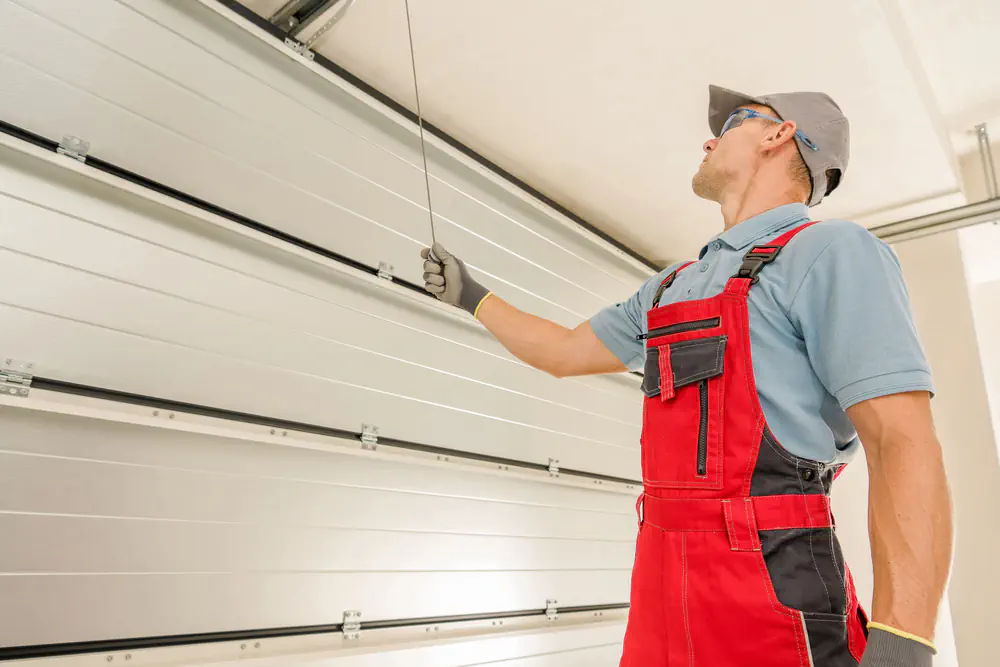
Preventing repeated C.H.I. overhead door breakdowns does not require a lot of time or money. It requires consistency. Here is what a simple, sustainable care routine looks like for most homeowners:
- Monthly: Do a visual and audio check during normal door operation. Look for anything that seems different. Wipe down sensors and keep the track area clean.
- Every 3 to 6 months: Apply lubricant to rollers, hinges, and springs. Check the weather seal condition. Test the door balance manually.
- Annually: Book a professional inspection and tune-up. Have springs, cables, rollers, and hardware checked by a qualified technician.
- Seasonally: Prepare the door for winter with fresh lubricant and a seal inspection. Clean off road salt and grime in the spring.
This level of care is realistic for any homeowner and makes a significant difference in how long your C.H.I. door goes between repairs.
UL Standards & Engagement explains why automatic garage door standards matter, especially when regular inspections and maintenance help safety systems keep working as intended.
Do Not Let the Same Problem Keep Coming Back
Recurring garage door failures are almost never bad luck. They are the result of conditions that can be identified, addressed, and prevented. Whether it is skipped maintenance, weather damage, the wrong replacement parts, or an aging opener, every cause on this list has a solution.
If your C.H.I. overhead door in Kingston, NH keeps breaking down, and you are tired of dealing with the same issues over and over, it is time to bring in someone who can get to the root of it. Aloha Garage Doors specializes in diagnosing exactly why doors fail repeatedly and building a maintenance plan that keeps them running reliably. Contact us today or give us a call to schedule a full inspection and put the repair cycle behind you for good.