At some point, every C.H.I. overhead door owner faces the same question. Is it worth repairing this again, or is it time to replace the whole thing? It is not always an easy call. Repairs can feel like the smarter, cheaper option in the moment. But sometimes they just delay the inevitable and cost more in the long run.
The answer depends on a few key factors, including the age of the door, the type and frequency of problems, the cost of repairs versus garage door replacement, and how well the door is still serving your home. For homeowners in Kingston, NH, where seasonal weather puts consistent stress on garage doors year-round, timing this decision right can save a significant amount of money and frustration.
This guide breaks down the specific situations where repair makes sense, the clear signs that replacement is the better move, and everything in between, so you can make a confident, informed decision.

When Repair Is the Right Call
Not every garage door problem signals the end of the line. In many cases, a targeted repair is all that is needed to get your C.H.I. door running reliably again. Garage door repairs make the most sense when the damage is isolated, the door is relatively young, and the overall system is still in good condition.
Repair is generally the right choice when:
- The door is less than 10 years old and has been well-maintained.
- The problem is limited to a single component such as a spring, roller, cable, or sensor.
- The door panels are in good shape with no significant warping, rust, or structural damage.
- The opener is functioning properly and is less than 10 years old.
- The total repair cost is well below half the cost of a new door installation.
Common repairs that are worth doing:
- Spring replacement on a door that is otherwise in solid condition.
- Roller or hinge replacement to restore smooth, quiet operation.
- Weather seal replacement to improve energy efficiency and keep out moisture.
- Sensor realignment or replacement to restore proper safety function.
- Cable replacement when a single cable has frayed or snapped.
A good rule of thumb used by experienced technicians is this. If a single repair restores the door to full, reliable function and the rest of the system is healthy, it is almost always worth doing.
To understand what types of problems are typically driving the need for these repairs, What Are the Most Common C.H.I. Overhead Doors Issues? gives a thorough breakdown of what homeowners deal with most often.
When Replacement Starts to Make More Sense
There is a point where continuing to repair an aging or heavily damaged door stops being cost-effective. Replacement becomes the smarter investment when the door has reached the end of its useful life or when the problems are too widespread to address with a single fix.
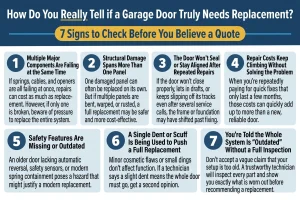
Replacement is worth considering when:
- The door is 15 to 20 years old or older and is showing signs of age throughout the system.
- You have needed two or more significant repairs within the past 12 months.
- Multiple components are failing at the same time, pointing to system-wide wear.
- The panels are severely dented, rusted, or warped, and the door no longer seals properly.
- Repair costs are approaching or exceeding 50 percent of the cost of a new door.
- The door no longer meets current safety standards, such as missing auto-reverse functionality.
Signs the door has gone past its useful life:
- Visible rust spreading across multiple panels that cannot be contained.
- Sections that are cracked, bent, or no longer align correctly when the door closes.
- The door regularly fails to open or close despite repeated repairs to different components.
- The insulation inside the door panels has broken down, significantly affecting energy efficiency.
Replacing an old door with a new C.H.I. model also gives you the opportunity to upgrade to better insulation, modern safety features, and a style that improves your home’s curb appeal.
The Age Factor: What the Numbers Actually Tell You
Age is one of the clearest indicators of where your door stands. C.H.I. overhead doors are built to last, but no door runs indefinitely. Knowing the typical lifespan of the door and its components helps you set realistic expectations and plan ahead.
General lifespan benchmarks to keep in mind:
- The door itself, with proper care, typically lasts 20 to 30 years.
- Torsion springs have a cycle life of roughly 10,000 to 20,000 cycles, depending on the model.
- Rollers generally last 10 to 15 years with regular lubrication.
- Garage door openers typically have a reliable lifespan of 10 to 15 years.
- Weather seals usually need replacement every 5 to 7 years, depending on climate exposure.
For homeowners in Kingston, NH, the harsh winters and wet springs tend to push components toward the lower end of these ranges. A door that might last 25 years in a mild climate may show significant wear in 15 to 18 years in a harsher environment.
What to do with this information:
- If your door is under 10 years old and a single component fails, repair is almost always the right call.
- If your door is between 10 and 15 years old, evaluate the overall condition before committing to a major repair.
- If your door is over 15 years old and requires a significant repair, get a full system inspection first to understand the complete picture before spending money on just one component.
The True Cost Comparison: Repair vs. Replacement
One of the most practical ways to approach this decision is to compare the actual costs involved. While replacement has a higher upfront cost, it often delivers better long-term value when you factor in the reduced frequency of repairs, improved energy efficiency, and the extended lifespan of a new system.
What to consider when comparing costs:
- Get a written estimate for the repair being proposed. Then ask your technician for an honest assessment of what else on the door is likely to need attention within the next two to three years.
- Compare that total projected repair cost against the cost of a new door installation.
- Factor in any energy savings from better insulation if your current door is uninsulated or has degraded insulation.
- Consider the value a new door adds to your home’s appearance and resale value.
A common scenario is a homeowner who spends money on a spring repair, then needs a cable replacement two months later, then an opener replacement six months after that. Each repair felt reasonable on its own, but the combined total exceeded what a new door would have cost.
This is sometimes called the repair trap, and it is one of the most important things to avoid when managing an aging garage door system.
Understanding how to choose a garage door based on long-term value and cost considerations can help homeowners avoid repeated repairs that add up over time.
Safety Issues That Make Replacement Urgent
Some situations go beyond cost comparisons. When a garage door poses a safety risk, replacement is not optional. It becomes a priority.
Safety-related reasons to replace without delay:
- The door lacks a functional auto-reverse system. Auto-reverse is a required safety feature that stops and reverses the door if it contacts an object while closing. Older doors and openers may not have it or may have a system that no longer functions correctly.
- The springs are showing signs of severe wear and have failed multiple times. A failing torsion spring under load is a serious hazard.
- The door panels are so structurally compromised that the door cannot reliably support its own weight.
- The bottom seal is missing entirely, allowing pests, water, and cold air to enter freely and creating slip hazards in freezing conditions.
For guidance on how to address specific safety-related problems in the meantime while you plan your replacement, How to Resolve C.H.I. Overhead Door Problems Like a Pro covers practical steps for the most common situations.
Timing Your Decision Around Kingston’s Seasons
In Kingston, NH, timing matters when it comes to both repairs and replacements. Making the right move at the right time of year can affect how smoothly the process goes and how much it costs.
Best times to schedule a replacement:
- Late summer and early fall are ideal. The weather is stable, installers tend to have more availability, and you will have a fully functioning door before winter arrives.
- Spring is also a good window after the harshest winter weather has passed, and you can assess any damage from the cold months.
Times when repairs become urgent regardless of season:
- If your door fails completely during winter, getting it operational quickly takes priority over long-term planning.
- If a spring breaks or a cable snaps at any time of year, the door should not be used until it is repaired. Operating a door with a broken spring or cable can cause serious damage to the panels, opener, and surrounding structure.
What to avoid:
- Do not delay a known replacement through an entire winter. A door that is struggling in November will almost certainly fail completely at some point between December and March when stress on the system is at its peak.
The U.S. Department of Energy highlights how air sealing and weather exposure affect energy efficiency, which also explains why seasonal conditions can accelerate wear on garage door systems.
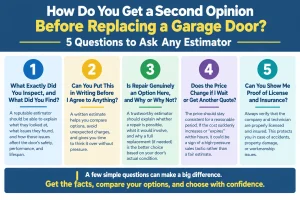
Questions to Ask Your Technician Before Deciding
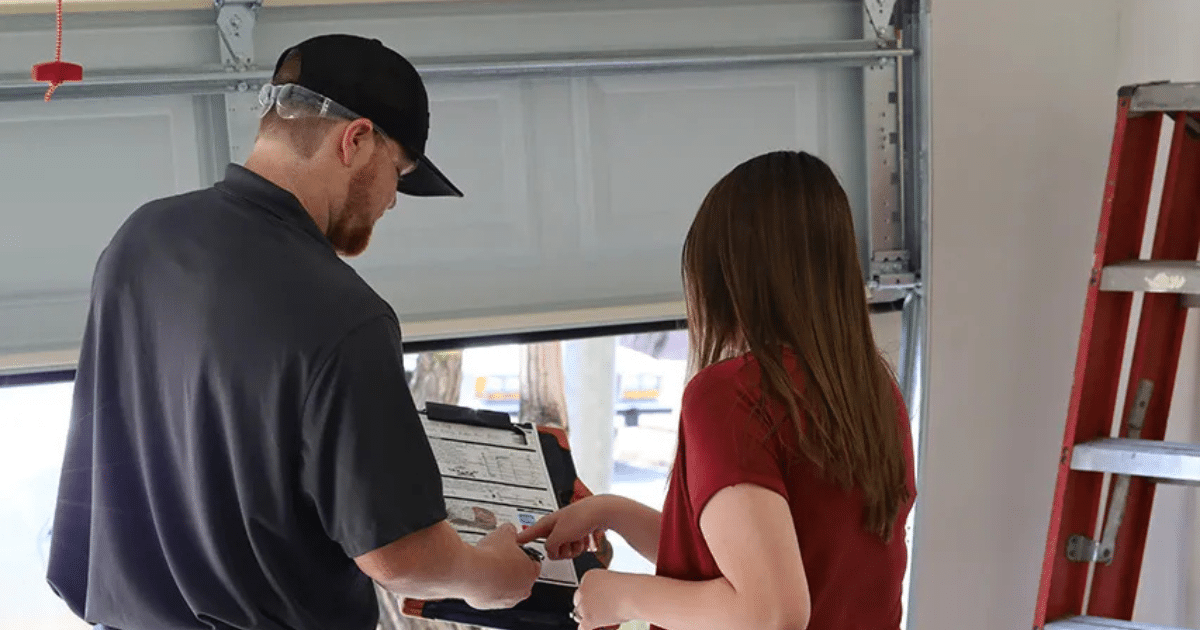
A good technician will not pressure you toward either option. Their job is to give you an honest assessment so you can make the best decision for your situation. Before you commit to either a repair or a replacement, make sure you get clear answers to these questions.
Ask your technician:
- What is the current condition of the springs, cables, rollers, and tracks beyond the problem I called about?
- Are there other components likely to fail within the next year or two based on what you are seeing?
- Is this repair a long-term solution or a short-term one?
- Would you recommend repair or replacement if this were your own home?
- What is the total installed cost of a comparable replacement door?
Getting these answers upfront puts you in a much stronger position to make a decision you will feel good about over the long term.
For a deeper understanding of the root causes behind the problems your technician finds, Why Your C.H.I. Overhead Door Keeps Breaking Down explains what drives repeated failures and how they connect to your current situation.
Making the Call With Confidence
There is no single right answer that applies to every situation. But there is always a right answer for your specific door, your budget, and your home. The key is gathering the right information before deciding.
If your C.H.I. overhead door in Kingston, NH, has been giving you trouble and you are not sure whether to repair or replace, the team at Aloha Garage Doors can help you work through it. We will give you a thorough inspection, an honest assessment, and a clear recommendation without the pressure. Contact us today or give us a call, and let us help you make the right call for your home.