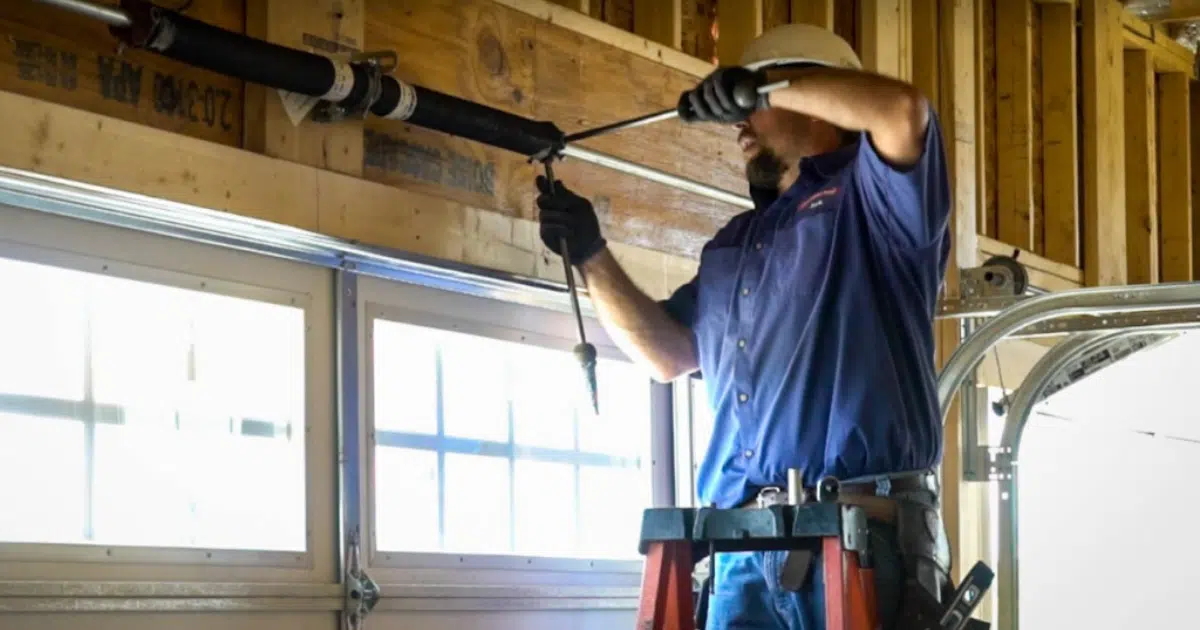
Garage door springs do not come with an expiration date stamped on the side. There is no dashboard light that tells you they are running low. Instead, they give off quieter signals that are easy to miss if you do not know what to look for. By the time most homeowners realize something is wrong, the spring has already failed, and the door is stuck, often requiring broken garage door spring repair.
Knowing when to replace your garage door springs is not about guessing. It comes down to understanding a few clear indicators tied to age, performance, and condition. For homeowners in Kingston, NH, where winter temperatures put extra stress on aging metal, catching these signals early can save you from a breakdown at the worst possible time.
This guide walks you through every sign that points to replacement, what to check on your own, and how to make a confident decision without second-guessing yourself.
Start With the Age of Your Springs
Age is the most straightforward factor when deciding whether replacement is due. Most standard garage door springs are rated for 10,000 cycles, where one cycle equals one full open and one full close. For a household that uses the garage door four times a day, that works out to roughly 7 to 10 years.
If your springs have never been replaced and your home is more than a decade old, age alone is a strong reason to have them inspected. Springs that have exceeded their rated cycle life are not just less effective; they are more likely to fail suddenly and without warning.
- Springs installed during original construction are typically builder-grade and rated at a minimum of 10,000 cycles.
- High-use households, such as those with multiple drivers or a home-based business, may reach that limit in as few as 4 to 5 years.
- If you are unsure of the age of your springs, a technician can estimate based on the condition and type of spring during an inspection.
For a full breakdown of how spring age connects to cycle ratings and lifespan, read How Long Do Garage Door Springs Last? to understand exactly what you are working with.
Physical Signs Your Springs Need to Be Replaced
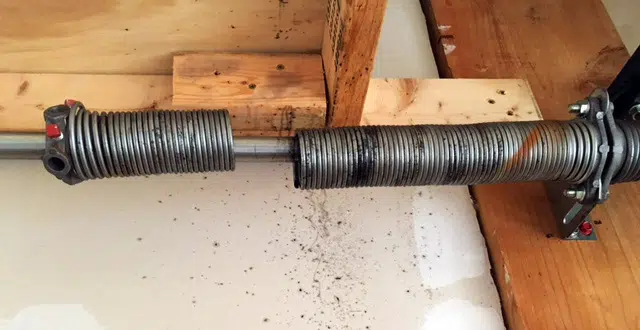
The clearest replacement signals are visible ones. If you take a few minutes to look directly at your springs, the condition of the metal will tell you a lot about where things stand.
Visible Gaps in the Coils
A torsion spring that has broken will show a visible gap or separation somewhere along the coil. This is the clearest sign that replacement is not optional. The spring has already failed, and the door should not be operated until it is replaced.
Heavy Rust Along the Coils
Surface rust can sometimes be addressed with lubrication, but rust that has eaten into the metal and caused pitting or flaking is a different problem. Deep rust weakens the coil structure and makes the spring far more likely to snap under load.
Stretched or Deformed Coils
Extension springs that have been stretched beyond their rated capacity will look uneven or elongated compared to how they looked when new. Coils that are visibly wider apart in some sections than others have lost their structural integrity and need to be replaced.
The Spruce’s guide on replacing garage door springs offers a useful visual reference for what worn, rusted, or deformed coils actually look like up close.
Performance Signs That Point to Spring Failure
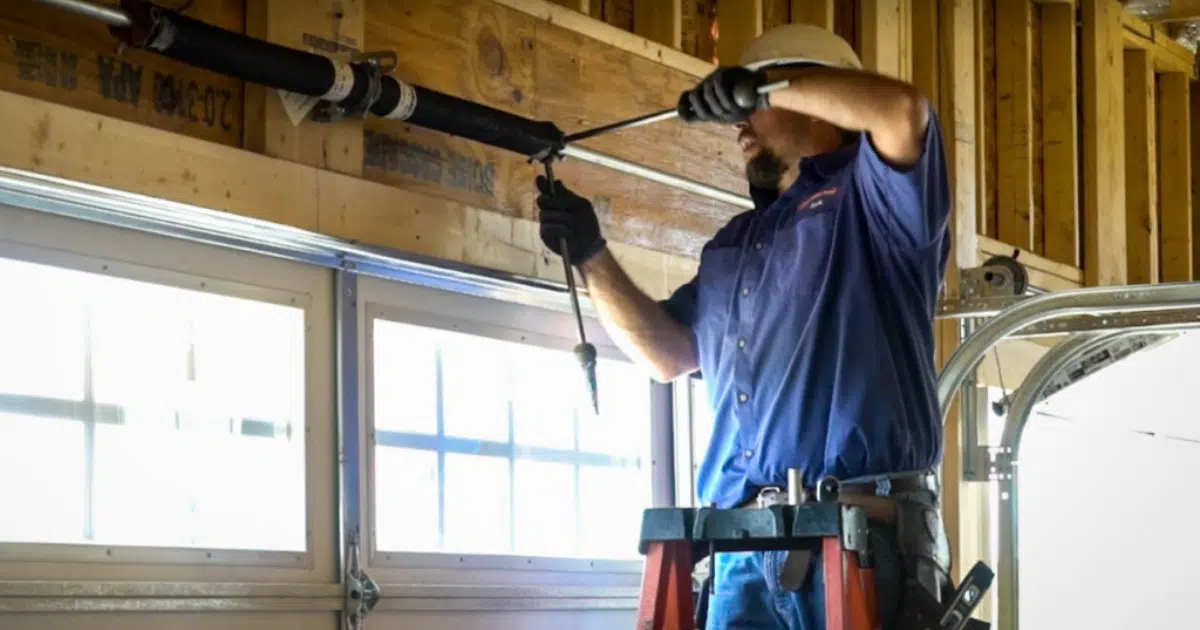
Not all spring problems are visible. Sometimes the first signal is the way the door behaves during normal operation. These performance changes are worth taking seriously because they often mean the spring is close to the end of its life.
- The door feels unusually heavy when lifted manually. Disconnect the garage door opener and try lifting the door by hand. A balanced door with healthy springs should rise smoothly and stay at waist height without support.
- The door opens or closes unevenly, with one side rising faster than the other. This usually means one spring is more worn than the other and is no longer providing equal lift.
- The opener strains noticeably when lifting the door. If the motor sounds like it is working harder than usual, the springs may no longer be providing the counterbalance the system depends on.
- The door stops partway through a cycle without a clear mechanical reason. A spring that has partially failed can no longer support the full range of motion.
Sound Signals You Should Not Ignore
Your garage door system communicates through sound. Changes in the sounds it makes during operation are often the earliest signals that something is wearing out. Learning to tell normal sounds from warning sounds can help you act before a failure happens.
- A loud bang from the garage is one of the most recognized signs of a spring breaking. The sound is sharp, similar to a gunshot or a car backfiring, and it often happens when the door is in use.
- Persistent squeaking or grinding during operation signals that the coils are dry and rubbing against each other. If lubrication does not resolve the noise, the spring may be too worn to benefit from it.
- A popping or snapping sound when the door reaches the top or bottom of its travel can indicate a spring under uneven tension that is approaching failure and may soon require garage door repair.
How Kingston Weather Affects Replacement Timing
For homeowners in Kingston, NH, the timing of spring replacement is influenced by local weather in a way that homeowners in milder climates do not always have to consider. Cold temperatures make metal more brittle and less flexible, which means springs that are already worn are at a higher risk of snapping during the winter months.
- If your springs are approaching the end of their rated cycle life, replacing them in the fall before temperatures drop is a smarter move than waiting for a winter failure.
- Springs that have developed surface rust going into winter are more vulnerable than springs that are kept lubricated, because cold and moisture together accelerate metal fatigue.
- A door that feels stiff or sluggish in cold weather may simply need lubrication, but if the problem persists after a fresh application, worn springs are a more likely cause.
Preventive care can make a major difference in how your springs perform during harsh weather. Why Garage Door Spring Maintenance Is Non-Negotiable explains the maintenance steps that help extend spring life and reduce the chance of winter breakdowns.
Should You Replace One Spring or Both?
This is one of the most common questions homeowners ask after a spring breaks. The answer in almost every case is to replace both at the same time, even if only one has failed.
Here is the reason. Both springs were installed at the same time and have gone through the same number of cycles. If one has reached the end of its life, the other is at the same point. Replacing only the broken spring means the second one is likely to fail within weeks or months, which brings you right back to another service call and another repair cost.
- Replacing both springs at the same time is more cost-effective because the labor cost covers both springs in a single visit.
- A matched set of new springs ensures the door lifts evenly and the load is distributed correctly from day one.
- Most reputable technicians will recommend dual replacement as standard practice and explain the reasoning before proceeding.
This Old House’s complete guide all about garage doors provides helpful context on how the full system works together, which makes the case for matched replacement even clearer.
Upgrading Your Springs at Replacement Time
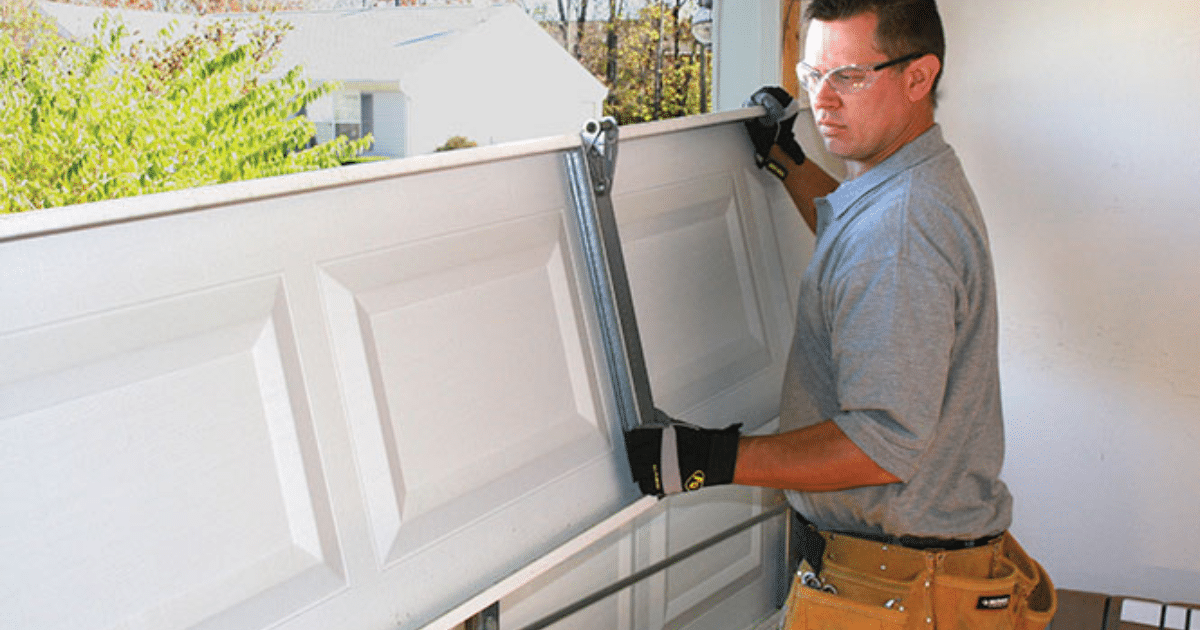
When replacement is due, you have the option to upgrade to a higher-cycle spring rather than replacing like for like. This is a decision worth considering carefully because it directly affects how long you go before needing another replacement.
- Standard springs rated at 10,000 cycles are the most common replacement option and work well for households with average usage.
- Springs rated at 25,000 cycles are built with thicker, higher-grade steel and are a practical upgrade for households that use the garage door frequently throughout the day.
- Springs rated at 50,000 cycles are available for high-use applications and offer the longest interval between replacements, though they come at a higher upfront cost.
Costs for replacement vary depending on spring type, cycle rating, and the labor rates in your area. Average pricing in Kingston, NH, may differ from national figures, so getting a local quote is always the right starting point.
What Happens If You Keep Delaying Replacement?
Delaying spring replacement once the signs are clear is a gamble that tends to cost more in the long run. A spring that is overdue does not just risk failing on its own. It puts stress on every other component in the system while it struggles to function.
- The opener motor works harder to compensate for the reduced spring support, which shortens its lifespan and can lead to premature motor failure.
- Cables and drums take on more load than they are designed to handle, increasing the risk of fraying or snapping.
- A door that drops unexpectedly due to a spring failure creates a real safety hazard for anyone or anything in its path.
If you want a clear picture of what happens to your garage door system when worn springs are left too long, read What Happens If You Ignore a Worn Garage Door Spring? for a detailed look at the risks involved.
Do Not Wait for a Breakdown to Make the Call
Do Not Wait for a Breakdown to Make the Call
Replacing garage door springs at the right time is one of the most straightforward ways to protect your home, your vehicle, and your daily routine. The signs are readable, the decision is clear once you know what to look for, and acting early costs far less than waiting for a complete failure. Whether your springs are showing their age or already giving you trouble, the window to act before things get worse is now.
Aloha Garage Doors brings honest assessments and skilled technicians to homeowners across the Kingston, NH area. From full spring inspections to precision replacements, we handle it all so you do not have to guess what comes next. Contact us today or give us a call to schedule a visit before a small problem turns into a bigger one.