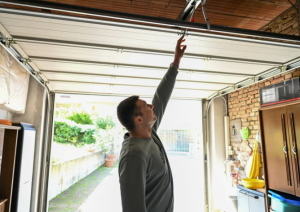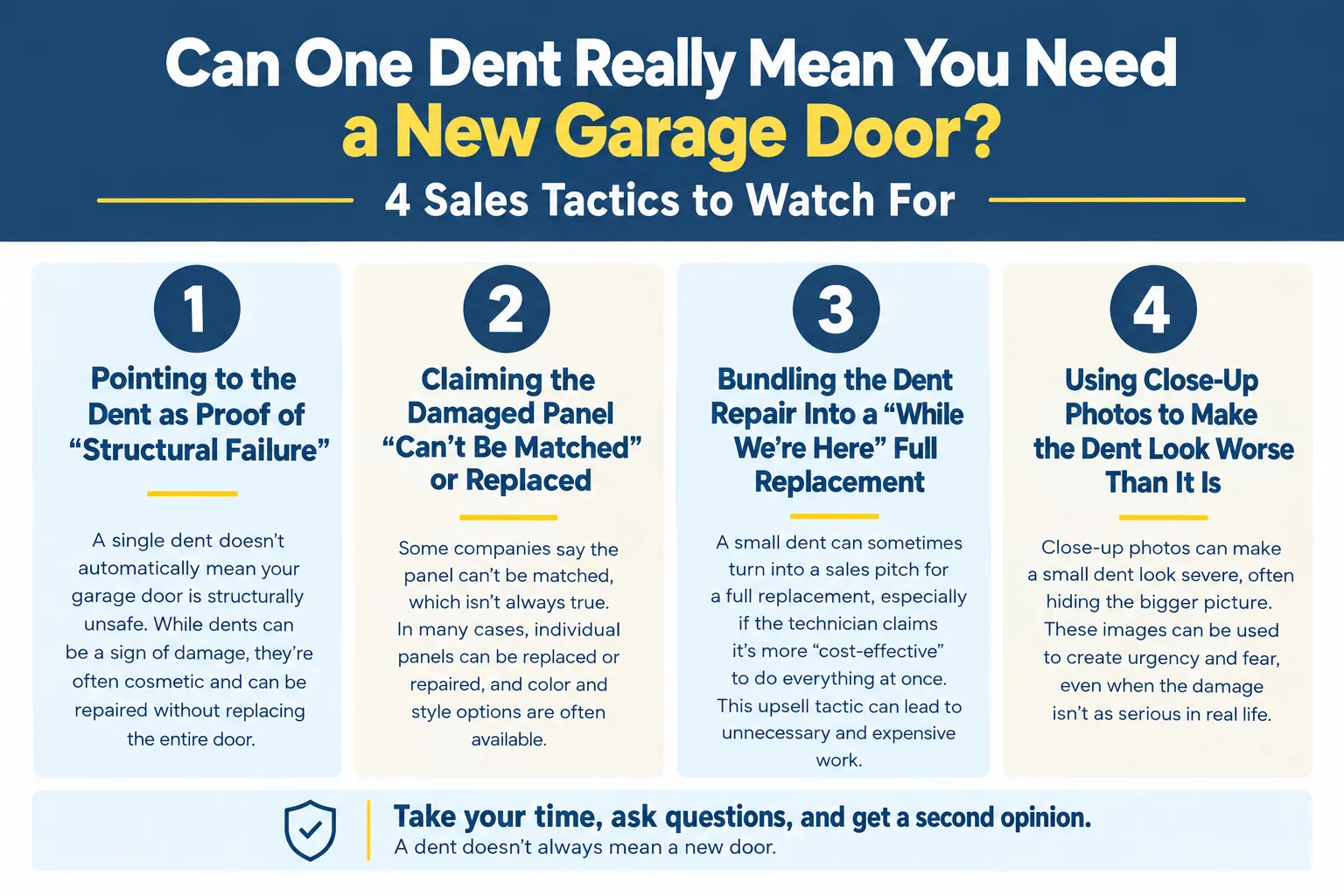
A single dent, scuff, or scratch on one panel almost never means the whole garage door needs replacing. Cosmetic damage to one panel typically has no effect on how the door opens, closes, or seals, and in most cases a panel repair or single-panel swap resolves it, without the cost of a full garage door replacement. If a technician points to one dent and moves straight to a full-replacement recommendation, without checking whether the door still functions properly, that’s usually a sales tactic rather than an honest structural finding. The questions below help you tell the difference before you agree to anything.
Key Takeaways
- Cosmetic damage to a single panel rarely affects the door’s structure, safety, or ability to seal.
- The real test is function: does the door still open, close, and seal properly despite the dent?
- Single-panel repair or replacement is usually possible and far cheaper than replacing the entire door.
- A technician who won’t check function before recommending full replacement is skipping a step that matters.
- These four tactics can appear alone or together, and each one is worth asking a direct question about before you agree to anything.
- Getting a second, independent look at the same dent costs little and can confirm whether repair really is enough.
Panel Damage: Cosmetic vs. Structural
Sign | Cosmetic (Repair Usually Enough) | Structural (May Need Replacement) |
Appearance | Dent, scuff, or scratch on one panel | Warping, bowing, or cracking across multiple panels |
Door operation | Opens, closes, and seals normally | Sticks, drags, or seals unevenly |
Panel alignment | Panel sits flush with the rest of the door | Panel is visibly out of alignment with neighbors |
Spread of damage | Contained to one panel | Present on two or more panels |
Typical fix | Panel repair or single-panel replacement | Full door assessment, possibly full replacement |
1. Pointing to the Dent as Proof of “Structural Failure”
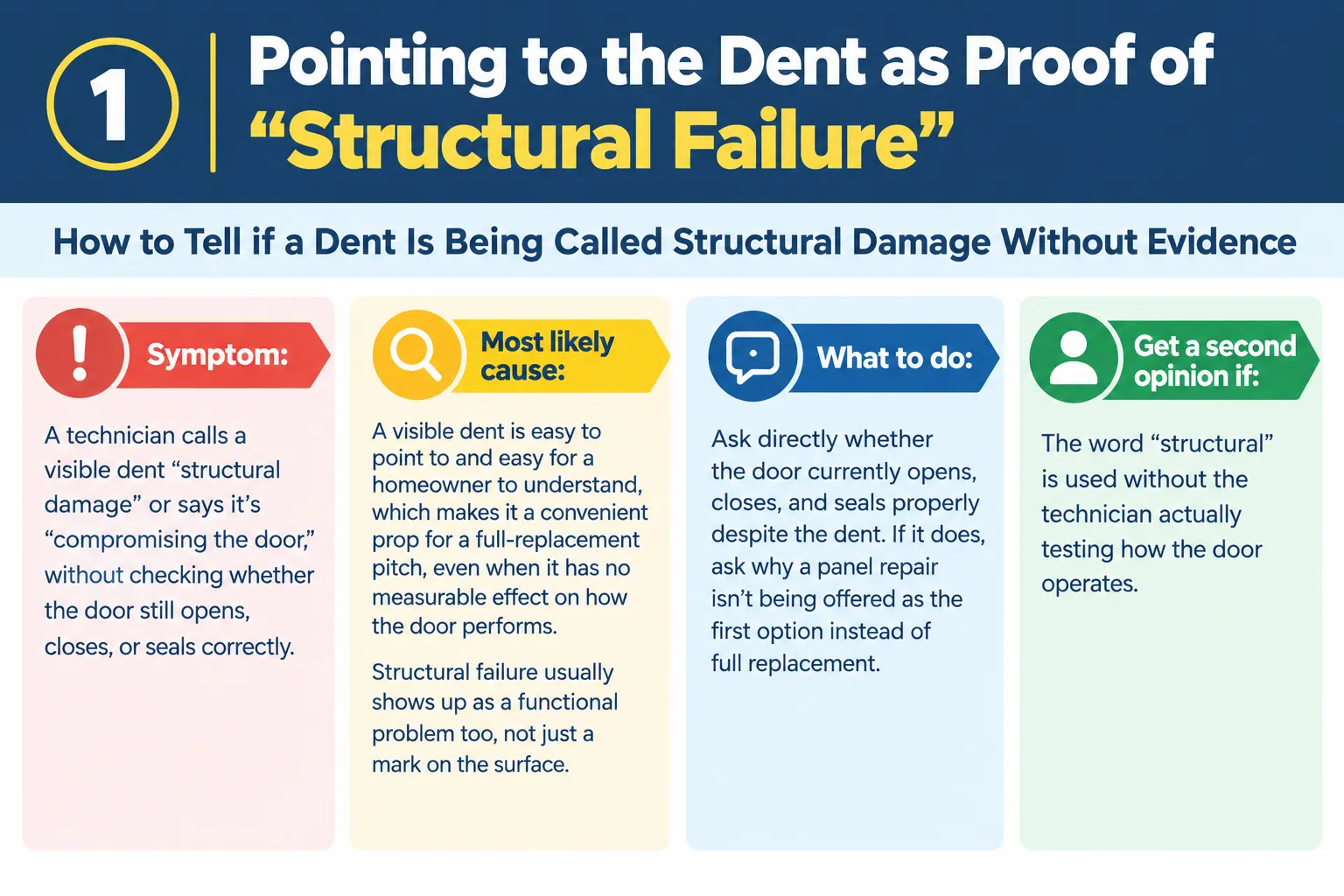
How to Tell if a Dent Is Being Called Structural Damage Without Evidence
Symptom: A technician calls a visible dent “structural damage” or says it’s “compromising the door,” without checking whether the door still opens, closes, or seals correctly.
Most likely cause: A visible dent is easy to point to and easy for a homeowner to understand, which makes it a convenient prop for a full-replacement pitch, even when it has no measurable effect on how the door performs. Structural failure usually shows up as a functional problem too, not just a mark on the surface.
What to do: Ask directly whether the door currently opens, closes, and seals properly despite the dent. If it does, ask why a panel repair isn’t being offered as the first option instead of full replacement.
Get a second opinion if: The word “structural” is used without the technician actually testing how the door operates.
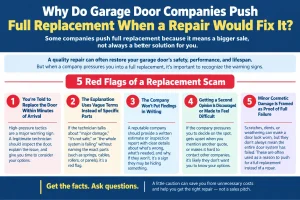
If you want the full list of red flags this kind of pitch tends to include, read Why Do Garage Door Companies Push Full Replacement When a Repair Would Fix It? 5 Red Flags of a Replacement Scam.
2. Claiming the Damaged Panel “Can’t Be Matched” or Replaced
Why “We Can’t Match That Panel” Is Sometimes Used to Justify Full Replacement
Symptom: You’re told the specific damaged panel is discontinued, unavailable, or impossible to match, so the only option is replacing the entire door.
Most likely cause: Some older or less common panel styles genuinely are harder to source. But this claim is also used, without much checking, as a shortcut past the cheaper single-panel option, especially when a technician hasn’t actually contacted a supplier to confirm availability before saying no matching panel exists.
What to do: Ask whether the company has actually checked with the manufacturer or a supplier for a matching or close-enough panel, and ask to see that confirmation. A legitimate “can’t be matched” claim usually comes with a specific reason, not just a verbal dismissal.
Get a second opinion if: You want an outside check on whether the claim is accurate before paying for a full replacement. A different company or supplier may be able to source the same panel, or a close match, for less than the cost of full replacement.
3. Bundling the Dent Repair Into a “While We’re Here” Full Replacement
How to Spot a Bundled Upsell Disguised as Convenience
Symptom: A technician suggests that since they’re already there for the dent, it makes sense to “just replace the whole door” while they have the equipment and time.
Most likely cause: Convenience framing makes a bigger sale feel like it’s saving you a second visit, but it can also be a way to move a straightforward, low-cost repair into a much larger, higher-margin job before you’ve had time to think it through or get a comparison quote.
What to do: Ask for the cost of the panel repair alone, separately from any full-replacement quote. Compare that number against the full-replacement price before deciding, rather than agreeing to the bundle on the spot.
Get a second opinion if: The pitch to “just do it all now” comes with pressure to decide before you leave the driveway, rather than time to compare the separate costs.
4. Using Close-Up Photos to Make the Dent Look Worse Than It Is
Why Close-Up Photos of Minor Damage Can Be Misleading
Symptom: A technician takes a close-up photo of the dent and shows it to you zoomed in, framing it as evidence the door is failing, without stepping back to show how the panel actually looks and functions at normal viewing distance.
Most likely cause: A macro photo of almost any dent looks dramatic. It’s a persuasive visual, but it doesn’t tell you anything about whether the damage affects the door’s operation, and it can make a minor cosmetic issue look far more serious than it is, especially to someone who isn’t used to inspecting garage doors closely.
What to do: Ask to see the damage at a normal distance, and ask the technician to demonstrate the door opening and closing so you can judge the actual functional impact yourself, not just the photo. A door that operates smoothly and seals evenly is telling you something more reliable than any close-up angle.
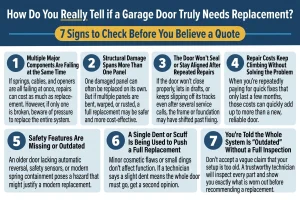
For the broader checklist of what genuinely signals replacement versus a sales tactic, read How Do You Really Tell if a Garage Door Truly Needs Replacement? 7 Signs to Check Before You Believe a Quote.
Get a second opinion if: The recommendation leans heavily on a photo rather than a demonstrated functional problem.
Trade groups like the International Door Association have documented similar convenience and urgency tactics across the industry and continue to publish updates as new patterns emerge, including recent reports shared by the association.
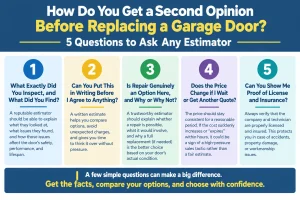
If you’d like a structured way to compare a replacement quote you’ve already received, read How Do You Get a Second Opinion Before Replacing a Garage Door? 5 Questions to Ask Any Estimator.
One Dent Isn’t a Verdict
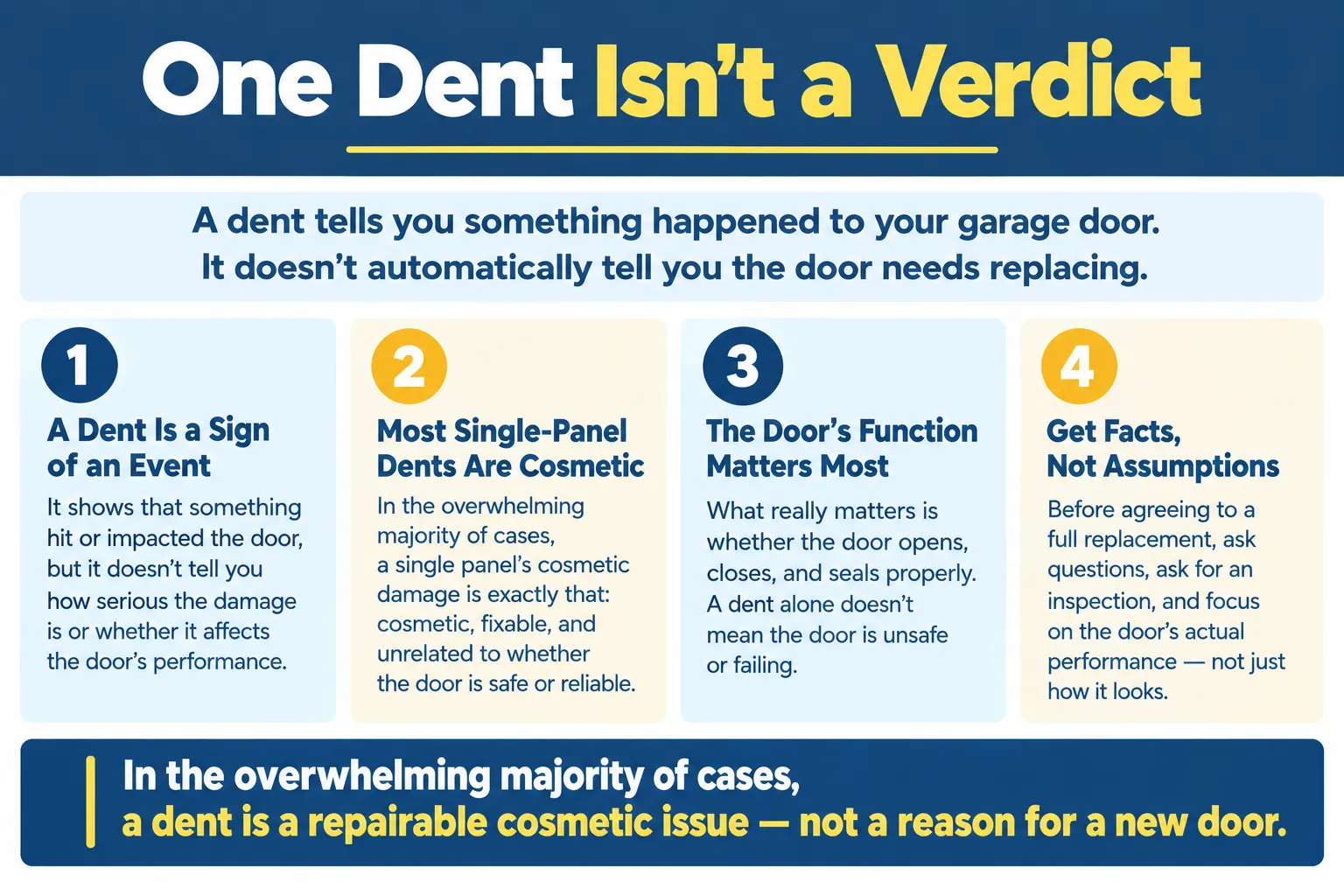
A dent tells you something happened to your garage door. It doesn’t automatically tell you the door needs replacing. In the overwhelming majority of cases, a single panel’s cosmetic damage is exactly that: cosmetic, fixable, and unrelated to whether the door is safe or reliable. The questions above take a few minutes to ask and can save you the cost of a replacement you never actually needed. If a technician can answer them clearly and directly, that’s a good sign. If they can’t, or won’t, that’s worth pausing on before you agree to anything.
If you’ve got a dent, scuff, or scratch and aren’t sure whether it’s cosmetic or something more, Aloha Garage Doors offers straightforward inspections in Kingston, NH, and the surrounding area, with a clear answer on repair versus replacement before any work starts. Contact us or give us a call to book a free inspection or get a second opinion on a quote you’ve already received.