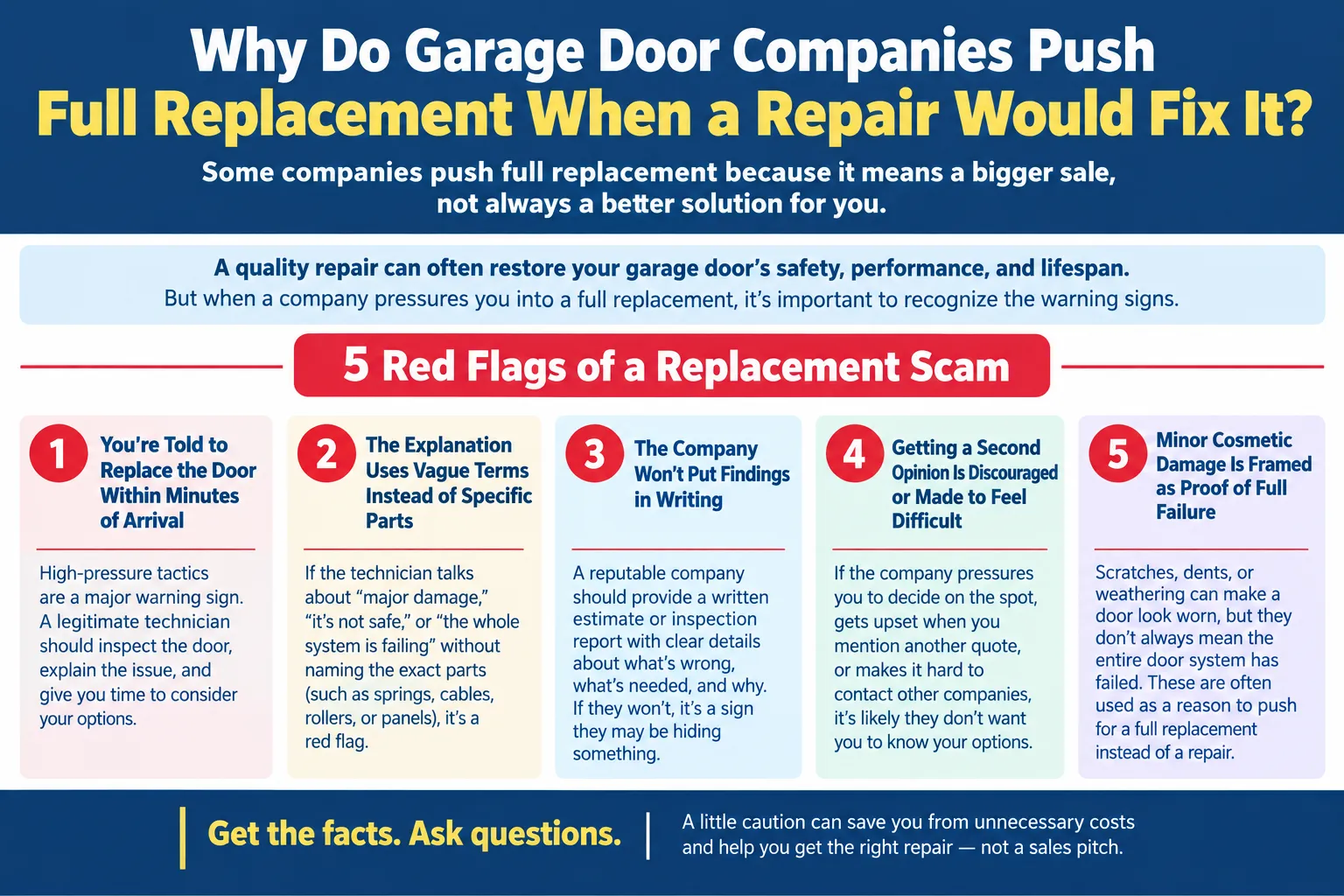
A garage door company is likely pushing unnecessary garage door replacement when they recommend it fast, without a full inspection, refuse to put findings in writing, resist a second opinion, or treat normal wear as proof the whole system has failed. None of these tactics are universal, and plenty of legitimate replacements are recommended quickly because the damage is genuinely that clear. The difference is whether the company can explain, in writing, exactly what they found and why repair won’t work. If they can’t or won’t, that’s the flag worth paying attention to.
Key Takeaways
- Speed alone isn’t proof of a scam, but speed combined with no written explanation usually is.
- A legitimate assessment can point to specific failing parts. A pressure pitch usually can’t.
- Resistance to a second opinion is one of the more reliable warning signs across home-service industries generally.
- Normal age or minor wear is not the same as system-wide failure, even if it’s described that way.
- Trade groups tracking this industry have documented these exact patterns repeatedly, so this isn’t a rare or isolated problem.
- The tactics below can appear alone or stacked together, and the more of them present at once, the stronger the signal that something is off.
Legitimate Assessment vs. Red-Flag Pressure Sale
What You’re Told | Legitimate Assessment | Red-Flag Pressure Sale |
How fast is replacement recommended | After inspecting the full system | Within minutes, often before a full look |
Explanation of findings | Specific parts named, in writing on request | Vague, general terms like “outdated” or “worn out” |
Reaction to a second opinion | Comfortable, sometimes encourages it | Discouraged, rushed, or treated as unnecessary |
Pricing structure | Written estimate before work begins | Verbal only, or changes once you’ve agreed |
Urgency tactics | None, or genuine safety urgency explained clearly | “Today only” pricing or same-day pressure |
1. You’re Told to Replace the Door Within Minutes of Arrival
 0
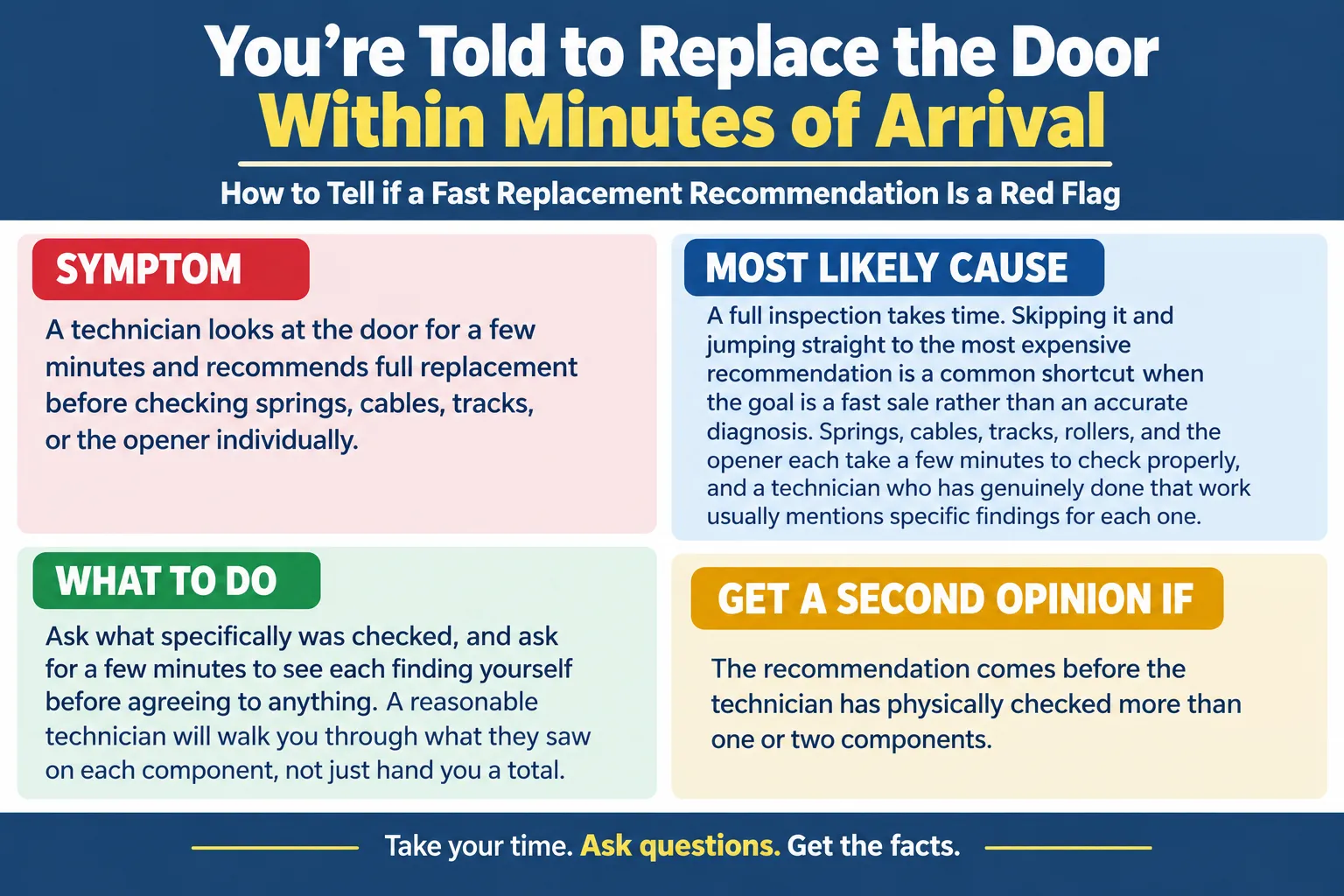
How to Tell if a Fast Replacement Recommendation Is a Red Flag
Symptom: A technician looks at the door for a few minutes and recommends full replacement before checking springs, cables, tracks, or the opener individually.
Most likely cause: A full inspection takes time. Skipping it and jumping straight to the most expensive recommendation is a common shortcut when the goal is a fast sale rather than an accurate diagnosis. Springs, cables, tracks, rollers, and the opener each take a few minutes to check properly, and a technician who has genuinely done that work usually mentions specific findings for each one.
What to do: Ask what specifically was checked, and ask for a few minutes to see each finding yourself before agreeing to anything. A reasonable technician will walk you through what they saw on each component, not just hand you a total.
Get a second opinion if: The recommendation comes before the technician has physically checked more than one or two components.
2. The Explanation Uses Vague Terms Instead of Specific Parts
Why Vague Language Like “System Is Outdated” Is a Common Red Flag
Symptom: You’re told the door or opener is “outdated,” “worn out,” or “at the end of its life,” without a specific part being named.
Most likely cause: Vague language is harder to challenge than a specific, checkable claim. A technician who has genuinely found a failing spring, cable, or track can usually say so directly, since that’s a concrete, verifiable fact rather than an impression.
What to do: Ask directly: which specific part is failing, and what would happen if it wasn’t replaced? A legitimate answer will be concrete, often naming the exact component and describing what you’d see if you looked at it yourself.
Get a second opinion if: The explanation stays general even after you ask a direct, specific question.
3. The Company Won’t Put Findings in Writing
How to Respond When a Garage Door Company Refuses a Written Estimate
Symptom: A verbal recommendation and a verbal price, with resistance or delay when you ask for it in writing.
Most likely cause: A written estimate creates a paper trail and a fixed price. Some companies avoid this specifically so the number can move once work has started, since a verbal quote is much easier to change than one that’s already been put on paper.
What to do: Request a written estimate that itemizes what’s being replaced and why, before any work begins. This is a normal, reasonable ask for any home service, and it protects you if the final bill doesn’t match what you were told.
Get a second opinion if: The company delays, avoids, or refuses to provide anything in writing. A short delay for paperwork is normal; an outright refusal, or repeated excuses, is not.
4. Getting a Second Opinion Is Discouraged or Made to Feel Difficult
Why Discouraging a Second Opinion Is One of the Clearest Warning Signs
Symptom: A technician implies there isn’t time to wait for a second opinion, or reacts negatively when you mention wanting one.
Most likely cause: A confident, accurate assessment holds up against a second look. Discouraging that comparison is one of the more consistent tactics reported across home-service scams generally, not just in this industry, because a second technician is often the fastest way to expose an inflated or unnecessary recommendation.
What to do: Treat any resistance to a second opinion as information in itself. A legitimate company should have no reason to discourage it, and a confident technician will often welcome the comparison rather than push back on it.
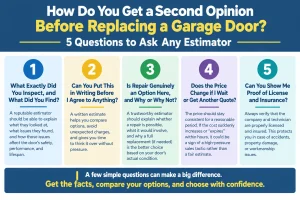
If you want a full walkthrough of what to ask a second estimator, read How Do You Get a Second Opinion Before Replacing a Garage Door? 5 Questions to Ask Any Estimator.
Get a second opinion if: You feel rushed, pressured, or discouraged from comparing quotes in any way.
5. Minor Cosmetic Damage Is Framed as Proof of Full Failure
How to Tell if Cosmetic Damage Is Being Used to Justify Unnecessary Replacement
Symptom: A single dent, scuff, or patch of surface rust is presented as the reason the entire door needs replacing.
Most likely cause: Cosmetic damage is visible and easy to point to, which makes it a convenient justification even when it has no real effect on how the door operates or seals. A dent is something you can see and understand immediately, which makes it a persuasive prop even when it’s not the actual problem.
What to do: Ask whether the damage affects opening, closing, or sealing. If it doesn’t, ask about a targeted panel repair instead.
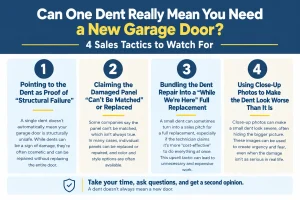
If a single dent is the reason you’re being told to replace the whole door, read Can One Dent Really Mean You Need a New Garage Door? 4 Sales Tactics to Watch For.
Get a second opinion if: Cosmetic damage is the only reason given for a full-replacement recommendation.
Trade groups have been tracking this exact pattern for a while. The International Door Association documents recurring pressure-sale tactics reported by both consumers and dealers across the industry, and continues publishing updates and reporting channels as new patterns emerge, including recent industry updates shared by the association.
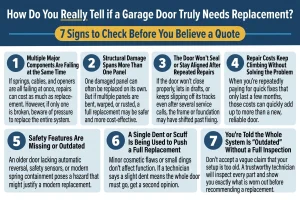
For the full checklist of genuine replacement signs (as opposed to these sales tactics), read How Do You Really Tell if a Garage Door Truly Needs Replacement? 7 Signs to Check Before You Believe a Quote.
Trust the Inspection, Not the Pressure
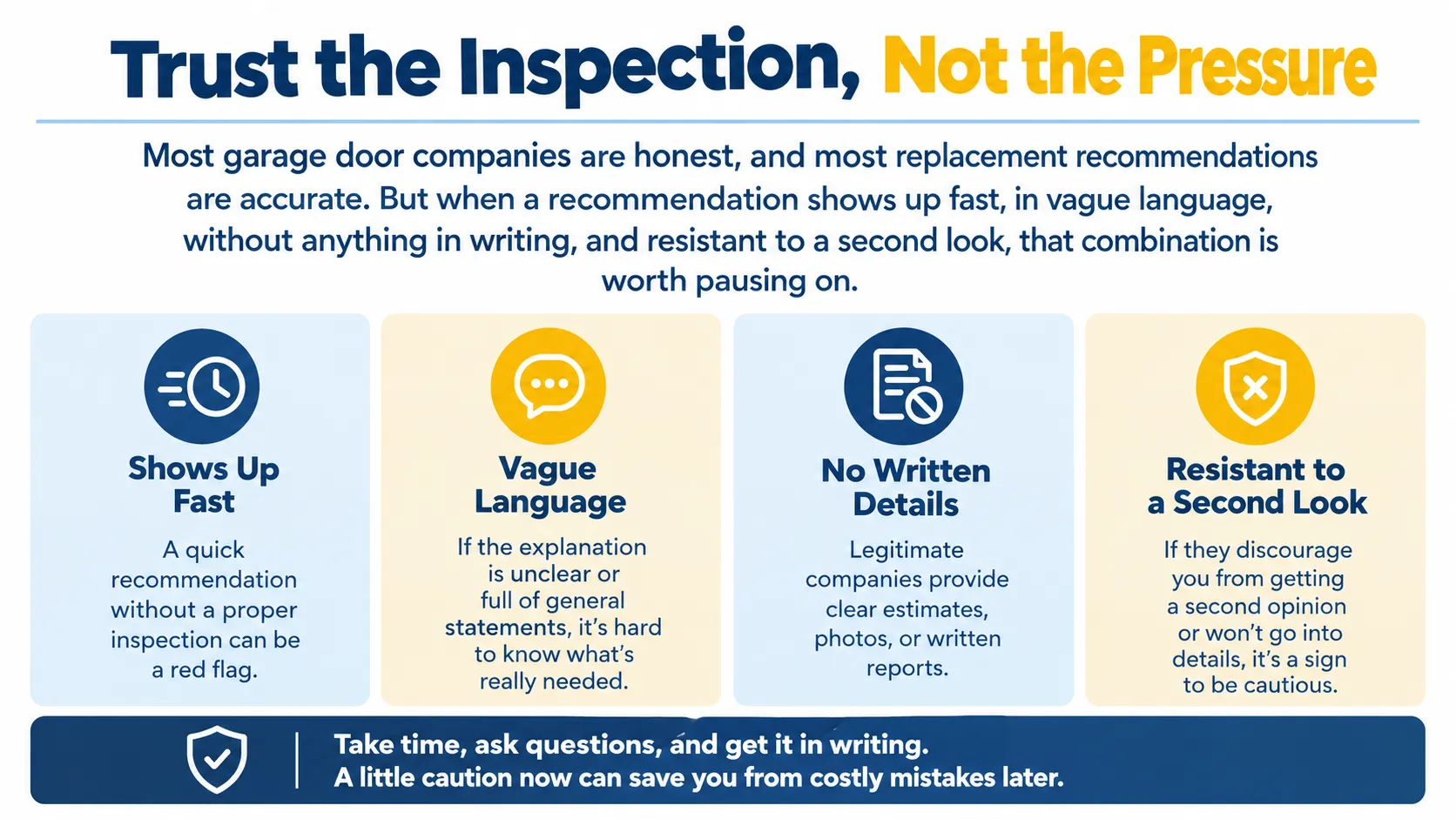
Most garage door companies are honest, and most replacement recommendations are accurate. But when a recommendation shows up fast, in vague language, without anything in writing, and resistant to a second look, that combination is worth pausing on. A legitimate assessment can stand up to questions. A pressure pitch usually can’t. The goal isn’t to distrust every technician who walks up your driveway. It’s to know which specific behaviors are worth slowing down for, so you can tell the difference between a genuinely urgent repair and a sales script dressed up as one, and act with confidence either way.
If you’ve received a replacement recommendation and want an honest second look, Aloha Garage Doors offers inspections in Kingston, NH, and the surrounding area, with findings explained in plain terms before any work starts, and no pressure to decide before you’re ready. Contact us or give us a call to book a free inspection or to get a second opinion on a quote you’ve already received.