Table of Contents
Your garage door does more than allow your vehicle to enter or exit. It enhances home security and makes daily routines easier. Modern garage door sensors are a crucial safety feature, whether installed as part of a new garage door system or as an upgrade to an existing one that already has sensors in place.
When sensors function correctly, they ensure the door can operate safely and that the surrounding area is clear of obstructions. If a malfunction develops, however, your home could face unnecessary risks that may require prompt garage door repair. Understanding how these sensors operate and knowing what actions to take when issues appear helps maintain reliable performance and steady protection throughout your home.
Understanding Modern Garage Door Sensors and Their Features
Modern garage door sensors may be small, but they manage a major task within your residential garage door system. These devices help keep the garage safe by detecting anything that enters the path of the door. When a sensor detects an object in the way, it prevents the door from closing, helping to reduce the risk of injury to a household member or damage to belongings. Today’s sensors are far more reliable than older models, offering greater precision and consistent performance in daily operation. Many updated sensors can also connect with smart home platforms, allowing you to receive alerts and status updates directly on your mobile device.
When you understand the basics of these sensors, it becomes clear why they are such an essential part of your system. Modern options include infrared sensors, wireless versions, and smart-enabled models that provide additional layers of awareness. Their advanced detection ability, improved alignment accuracy, and integration with smart home features make them a must-have for homeowners seeking smoother operation and enhanced safety from their garage door system.
To learn more about how these features support a safer home, be sure to read “The Role of Smart Garage Door Sensors in Building a Safer Home.”
Overview of How Garage Door Safety Sensors Work in Today’s Homes
Garage door safety sensors rely on a simple but highly effective idea to support a safer garage system. These sensors create an invisible line of protection using a light beam that is invisible to the human eye. One sensor sends out the beam, while the other receives it. Most setups place the sensors about six inches above the garage floor, which is low enough to detect a pet, the wheels of a vehicle, or any object that moves into the door’s path, even in a busy commercial garage door environment.
For the garage door to close, the light beam must remain steady and unbroken. If anything enters the space between the sensors as the door begins to lower, the receiving sensor detects the interruption and signals the garage door opener right away. The opener then stops the downward movement and reverses the door, preventing damage to items or injury to a household member.
This fast response is one of the most essential safety functions of a modern garage door system. By stopping the door before it continues downward, the sensor helps ensure the path is clear. This technology remains a standard part of today’s garage door setups, supporting safer everyday operation and allowing the door to close only when the area is confirmed to be clear.
For a deeper look at how these systems integrate with your smart home setup, check out “How Garage Door Sensors Enhance Smart Home Security Systems.”
Types of Garage Door Sensors Used With Leading Opener Brands
While the core photoelectric beam technology remains consistent across all systems, the design, communication signals, and indicator lights of garage door sensors can vary depending on the brand of the opener. The main difference a homeowner will notice is the color of the LED lights on each sensor, which helps confirm whether the units are working properly. Most standard setups include one sensor with a green LED and the other with a red LED.
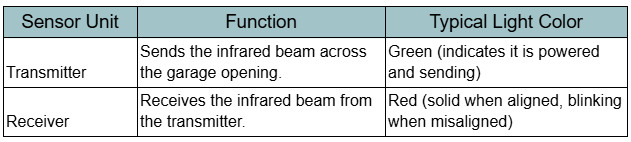
The green light typically shows that the sensor is receiving power and actively sending its infrared beam. The red light confirms that the paired sensor is receiving this beam without any breaks. When the red light begins blinking, it almost always indicates that the sensors are out of alignment and unable to communicate. This misalignment prevents the opener from lowering the door, signaling that the pathway may not be clear.
Although most brands rely on similar mechanics, it is essential to select a sensor that matches your specific model of opener. Sensors are calibrated to work with particular circuits and communication patterns, and using the correct type ensures the system responds accurately. Below is a simple breakdown of common roles you will find among modern garage door sensors:
To learn why these upgrades matter for smart homes today, read our companion guide, Why Modern Garage Door Sensors Are Essential for Smarter Living.
Essential Features That Set Modern Garage Door Sensors Apart
Modern garage door sensors come with several essential features that help keep the garage door opener safe and operating smoothly. These sensors are not just additional parts; they are crucial parts of the system and have been legally required for many years to reduce the chance of accidents around moving doors. When a sensor stops working correctly, a garage door sensor replacement may be necessary, especially after checking the key features that support reliable daily performance.
One of the most valuable features is the diagnostic LED lights located on the sensor lenses. These tiny indicators make it simple to check whether the sensors are aligned, powered, or experiencing any kind of issue. Each safety sensor setup consists of a sending unit and a receiving unit, which communicate to ensure the door only moves when the pathway is clear. When these units function together correctly, they provide steady protection for the entire system.
Key features include:
- Photoelectric Beam:
A focused, invisible beam helps the system detect anything that enters the door’s path as it closes. - Diagnostic Lights:
LED indicators, commonly red and green, make it easy to check alignment, confirm power, and detect any obstructions blocking the beam. - Low Placement:
Positioned roughly six inches above the floor, these sensors are designed to detect low-level objects, such as a pet or items close to the ground. - Automatic Reversal Signal:
If the beam is interrupted, the opener receives an instant signal to reverse the door, helping prevent damaged belongings or an injured household member.
The Role of Garage Door Sensors in Kingston, NH Home Security
For any homeowner in Kingston, NH, a garage door sensor plays a far more important role than simply making daily routines easier. It serves as a crucial safety feature that helps protect your home by ensuring the garage door closes completely during every cycle. Since the garage is one of the most significant entry points to the house, maintaining a secure closing sequence is essential for overall protection.
If the sensor is not working correctly, the door may fail to close or repeatedly reverse, leaving the garage partially open. This can weaken your home’s security and create unnecessary risk. The sensor should be the first part you check whenever the garage door opener begins acting unusually or fails to respond. When functioning correctly, the sensor supports a secure environment by protecting your household and preserving your belongings from damaging conditions.
Keeping your garage door sensor in reliable condition is one of the simplest yet most important steps in maintaining a safer property.
How Garage Door Safety Sensors Prevent Accidents and Intrusions
The primary task of a garage door safety sensor is to reduce the chance of accidents. The sensor creates a focused infrared beam across the opening. As the garage door lowers, the system checks whether anything enters that space, such as a child, a pet, or an object close to the ground. If the beam breaks, the opener immediately stops movement and reverses the door. This fast response helps prevent damaged items or an injured household member.
These sensors also support home security. A malfunctioning sensor can prevent the door from closing, which leaves the garage unsecured. A door that suddenly reverses without reason may signal that the sensor needs alignment, cleaning, or inspection. Maintaining a fully functioning sensor ensures the garage stays locked and reduces the chance of unauthorized entry.
Reliable safety sensors play a crucial role in maintaining the home’s security and protecting the garage.
Integration of Smart Garage Door Sensors into Home Security Systems
Today’s smart garage door sensors extend far beyond simple detection. When these sensors are installed in a smart-enabled garage door system, they become an active part of the home’s security network. This integration enables homeowners to check and control their garage door directly from a mobile device, regardless of their location.
This convenient access provides a steady sense of peace of mind. If you are unsure whether the garage door closed properly, you can check the status through your app. If needed, you can remotely close it, preventing unnecessary risks. This level of control is highly valuable for any homeowner who wants dependable protection at all times.
Key integration benefits include:
- Real-time notifications when the door opens or closes
- Alerts if the door remains open for a long period
- Remote operation to open or close the door for deliveries or guests
- Activity logs that track when the garage was accessed
Security.org explains how smart garage door systems integrate with mobile apps, voice assistants, and broader security platforms to provide remote control and real-time alerts.
Benefits of Upgrading to Smart Garage Door Sensors
Upgrading to modern smart garage door sensors can improve daily routines and strengthen overall home protection. When combined with a smart garage door opener, these advanced sensors offer far more than basic safety functions. They provide steady control, improve everyday convenience, and support a sense of confidence in your home’s security. Adding these upgraded sensors to your garage door system brings your space closer to the connected lifestyle many homeowners choose today.
With these improvements, you can access your garage door remotely and easily link the system with other smart home devices.
Advantages for Smarter Living and Convenience
A smart garage door opener helps streamline daily routines for any homeowner. You no longer have to feel unsure about whether the garage door was left open. Through your mobile device, you can check the current position of the door at any time, whether you are at work, running errands, or even traveling. This remote access is beneficial for busy households that depend on consistent garage door use throughout the day.
You can also allow a trusted visitor or delivery technician to enter the garage without sharing a physical key or access code. By using your phone, you can open or close the garage door from anywhere, enhancing both convenience and security. This flexibility helps you automate part of your routine, reducing concerns about door operation and giving you more time to focus on important daily tasks.
Enhanced Safety and Real-Time Monitoring Features
Smart garage door sensors extend safety beyond the standard features found in traditional systems. While basic sensors prevent the door from closing on an object, smart versions enable real-time monitoring of activity, regardless of your location. This active form of protection offers a significant advantage for homeowners who want a heightened awareness of what is happening around their garage entrance.
For example, if the garage door opens unexpectedly or fails to close after you leave, you receive a mobile alert right away. From there, you can close the door remotely or check connected security cameras for added confirmation. Instead of reacting after something occurs, smart sensors help you respond quickly and prevent unwanted situations before they escalate.
This constant connection supports a greater sense of security by confirming that your home remains protected, even when you are unable to inspect it yourself.
Compatibility With Other Smart Home Devices
One of the best features of a smart garage door system is its ability to communicate with other smart devices in your home. You get an easy, automated experience. Your opener is not just sitting there on its own. Now, it can connect with many parts of your home’s smart network.
For homeowners who already have a smart home, adding their garage door is the next smart move. You can connect your opener to voice assistants, security systems, and smart lights. Establish routines that help you accomplish tasks and maintain a safe home.
Examples of smart home connections include:
- Turn on your lights right when the garage door opens.
- Connecting your garage door to your security system so that opening the door turns the alarm off.
- Ask Alexa or Google Assistant to open or close your garage door by voice.
Modern garage door sensors play a crucial role in today’s smart homes by enhancing safety, bolstering security, and streamlining daily routines. These advanced features help create a dependable environment and support smoother garage door operation for every homeowner.
At Aloha Garage Doors, our team is committed to providing high-quality garage door solutions that enhance safety and ensure long-lasting performance. Whether you are choosing new smart sensors or upgrading your current system, our technicians offer reliable installation and clear guidance tailored to your needs. Contact us today or call us to learn how we can help make your home safer, smarter, and better protected.
SafeWise, a home security research group, notes that motion and contact sensors play a central role in modern security systems, working alongside garage door sensors to detect activity and trigger alerts.
Frequently Asked Questions
How do I know if my garage door sensor needs to be replaced?
A garage door sensor may need replacement when the indicator lights do not turn on or the door still refuses to close, even after cleaning the lenses and checking the alignment. If you complete basic steps, such as cleaning, checking the brackets, and confirming the wiring, and the faulty sensors still do not respond, the system may require a new sensor. A damaged garage door sensor can weaken home security, so replacing it promptly is essential.
What are the common reasons my garage door sensor isn’t working?
The most common causes include misaligned sensors, dirty lenses, or wiring issues. Because the sensors sit close to the ground, dust, dirt, and cobwebs often collect on the lenses and block the beam. A light bump from trash bins, stored items, or a pet can also cause the brackets to shift. When misalignment occurs, the garage door may not open or close properly.
How can I troubleshoot a flickering or unlit garage door sensor LED?
A flickering LED often indicates that the lenses are not aligned or require cleaning. Gently adjust the sensor brackets until the indicator light stays steady. If the LED is completely off, check whether the sensor is receiving power and inspect the wiring for damage. A completely unlit LED usually points to a wiring or power issue rather than a simple alignment problem.
What is a safety sensor kit for a garage door?
A safety sensor kit comprises two photoelectric sensors: a transmitter and a receiver. These sensors are mounted on each side of the garage door opening. Required for all modern garage door openers, they serve as an essential safety function by detecting objects in the door’s path and preventing the door from closing on them.
How do garage door safety sensors work?
Garage door safety sensors create a narrow, invisible beam of light between two units. The opener will only lower the door when this beam remains clear. If a household member, pet, or object crosses the beam, the system detects the interruption and signals the opener to stop and reverse. This helps prevent damaged items and injuries to homeowners.
Can I install garage door sensors myself?
If you understand basic wiring, you may be able to install new sensors yourself in about 15 to 20 minutes. However, if you do not feel comfortable working near electrical components or if the system continues to malfunction afterward, contacting a professional is the safer choice. An expert can complete garage door maintenance and ensure the entire system works correctly.
What maintenance can help prevent garage door sensor problems?
Preventive maintenance includes wiping the sensor lenses with a dry, soft cloth to remove dirt and cobwebs. Check that the brackets are secure and have not shifted. These simple steps help garage door openers work smoothly and maintain the safety system’s reliability over time.
What are the benefits of a smart garage door opener?
A smart garage door opener allows you to operate and check the door from anywhere using your phone. You can receive real-time updates, set alerts, and allow trusted guests or delivery technicians access even when you are not home. This feature provides stronger control, improves safety, and brings peace of mind to every homeowner.
How do I clean and maintain my garage door sensors?
For quality garage door maintenance, gently wipe the lenses using a dry cloth to remove dirt and dust. If sprinklers are operating nearby, check for moisture that may interfere with their performance. Inspect the brackets to confirm they have not shifted or been bumped out of alignment. Even minor movement can prevent the sensors from working correctly.
What causes garage door sensors to misalign?
Misalignment often happens due to light bumps from items such as trash cans, yard tools, or pets. Regular use of the garage door system can also create small vibrations that slowly shift the brackets over time. The sensors must be aligned precisely for the beam to connect correctly; even slight movement can break the signal and cause a malfunction.
A garage door sensor may need replacement when the indicator lights do not turn on or the door still refuses to close, even after cleaning the lenses and checking the alignment. If you complete basic steps, such as cleaning, checking the brackets, and confirming the wiring, and the faulty sensors still do not respond, the system may require a new sensor. A damaged garage door sensor can weaken home security, so replacing it promptly is essential.
The most common causes include misaligned sensors, dirty lenses, or wiring issues. Because the sensors sit close to the ground, dust, dirt, and cobwebs often collect on the lenses and block the beam. A light bump from trash bins, stored items, or a pet can also cause the brackets to shift. When misalignment occurs, the garage door may not open or close properly.
A flickering LED often indicates that the lenses are not aligned or require cleaning. Gently adjust the sensor brackets until the indicator light stays steady. If the LED is completely off, check whether the sensor is receiving power and inspect the wiring for damage. A completely unlit LED usually points to a wiring or power issue rather than a simple alignment problem.
A safety sensor kit comprises two photoelectric sensors: a transmitter and a receiver. These sensors are mounted on each side of the garage door opening. Required for all modern garage door openers, they serve as an essential safety function by detecting objects in the door’s path and preventing the door from closing on them.
Garage door safety sensors create a narrow, invisible beam of light between two units. The opener will only lower the door when this beam remains clear. If a household member, pet, or object crosses the beam, the system detects the interruption and signals the opener to stop and reverse. This helps prevent damaged items and injuries to homeowners.
If you understand basic wiring, you may be able to install new sensors yourself in about 15 to 20 minutes. However, if you do not feel comfortable working near electrical components or if the system continues to malfunction afterward, contacting a professional is the safer choice. An expert can complete garage door maintenance and ensure the entire system works correctly.
Preventive maintenance includes wiping the sensor lenses with a dry, soft cloth to remove dirt and cobwebs. Check that the brackets are secure and have not shifted. These simple steps help garage door openers work smoothly and maintain the safety system’s reliability over time.
A smart garage door opener allows you to operate and check the door from anywhere using your phone. You can receive real-time updates, set alerts, and allow trusted guests or delivery technicians access even when you are not home. This feature provides stronger control, improves safety, and brings peace of mind to every homeowner.
For quality garage door maintenance, gently wipe the lenses using a dry cloth to remove dirt and dust. If sprinklers are operating nearby, check for moisture that may interfere with their performance. Inspect the brackets to confirm they have not shifted or been bumped out of alignment. Even minor movement can prevent the sensors from working correctly.
Misalignment often happens due to light bumps from items such as trash cans, yard tools, or pets. Regular use of the garage door system can also create small vibrations that slowly shift the brackets over time. The sensors must be aligned precisely for the beam to connect correctly; even slight movement can break the signal and cause a malfunction.