Table of Contents
Your garage door is more than a simple entry point; it is an essential part of your home’s overall protection. Modern garage door sensors now play a much larger role in home security than when they were first required as a basic safety feature. While early sensors focused only on stopping the door when something was in its path, today’s systems provide advanced awareness, communication, and integration with your smart home setup. These upgraded sensors work in conjunction with smart home devices to enhance security, improve monitoring, and support safer daily use, especially when paired with timely garage door repair performed by a qualified technician.
By understanding how these sensors function and how they integrate with other technologies, homeowners can benefit from enhanced protection against modern security risks.
Understanding Garage Door Sensors in Smart Home Security
Garage door sensors are no longer simple add-on parts; they now operate as an essential component of today’s smart security systems. These sensors communicate directly with the garage door opener, allowing them to link with the broader smart home network. This connection strengthens home protection by creating a more responsive and intelligent garage door system.
Once these sensors are installed and integrated, the garage door system does far more than open and close. It becomes an active layer of security, helping safeguard the garage, one of the most commonly used access points in a home. Modern sensor technology detects unusual activity, provides real-time alerts, and works in conjunction with other smart security tools to prevent unauthorized access. This smart integration also supports future upgrades, such as garage door installation for enhanced safety and performance.
By combining garage door sensors with your home’s smart ecosystem, homeowners gain a stronger, more dependable line of defense that helps keep the property protected around the clock.
To learn more about how these technologies elevate smart living, be sure to read How Modern Garage Door Sensors Make Your Home Smarter and Safer.
The Role of Garage Door Safety Sensors in Preventing Unauthorized Access
Garage door safety sensors are compact but essential devices designed to strengthen household protection. These sensors use two aligned photo-eye units—one on each side of the garage door opening. One unit sends an infrared beam, while the other receives it, creating an invisible line along the lower portion of the doorway. This safety feature is required on all modern garage door openers and is essential for preventing unsafe door movement.
When anything enters the beam area, such as a vehicle, a household member, or an object, the sensor immediately signals the opener to stop and reverse. In a smart-security setup, this protective feature becomes even more effective. If the beam breaks unexpectedly, homeowners can receive a real-time alert on their phone. This warning may indicate unusual activity at the garage entry, helping identify a possible security concern before it escalates.
For a deeper understanding of how these features support everyday protection, explore The Role of Smart Garage Door Sensors in Building a Safer Home.
To explore how smart sensors are shaping modern home security, Forbes highlights current smart-home tech trends that influence devices like garage door sensors.
How Garage Door Sensors Integrate with Modern Security Systems
The true advantage of modern garage door sensors becomes clear when they operate as part of a connected home security system. When paired with a smart garage door opener and linked to the home’s Wi-Fi network, these sensors can communicate with security cameras, alarms, motion-activated lights, and other smart devices.
For example, if the photo-eye beam is crossed during late hours or while the home security system is armed, multiple automated actions can occur at once:
- Security cameras can begin recording footage.
- Exterior lighting can be activated to increase visibility.
- The alarm system can send alerts or trigger audible warnings.
- The homeowner receives an instant mobile notification explaining the activity.
This level of interaction enables the residential garage door system to function as an active security checkpoint rather than merely serving as an access point.
To see how modern sensors take this even further, read Why Modern Garage Door Sensors Are Essential for Smarter Living.
For deeper insight into how smart sensors boost home awareness, Family Handyman explains how today’s smart garage technologies improve convenience and security.
Key Features of Smart Garage Door Sensors
Smart garage door opener sensors provide far more than basic safety. These devices support everyday convenience, stronger monitoring, and improved home protection. Through a connected smartphone app, a homeowner can check whether the garage door is open or closed at any moment. Remote updates ensure you stay informed even when you are away from home.
Smart sensor technology also enables you to operate the door remotely, connect the opener to virtual assistants, and customize alerts to suit your specific needs. When the sensor lenses stay clean and the wiring remains secure, these systems deliver steady, dependable performance. With reliable monitoring and advanced control features, smart garage door sensors are an excellent addition to any modern smart home.
Technology Behind Garage Door Safety Sensors
The technology used in today’s garage door opener sensors is simple yet highly effective. Each system relies on a photoelectric setup made of two coordinated units. One sensor, typically marked with a green indicator, emits an infrared beam toward the opposing unit. The receiving sensor, often indicated by a red light, confirms that the beam is aligned and uninterrupted.
For the system to work correctly, both units must face each other directly to maintain a straight, consistent signal. When the red indicator remains solid, the connection between the sensors is active. This creates an invisible safety barrier along the lower portion of the garage opening.
If anything enters this detection path, the receiving sensor loses the beam instantly and signals the opener to stop and reverse. When the sensors detect misalignment, dirt, or signal interruption, the LED lights may blink to alert the homeowner that the system needs checking. This immediate response is what makes the technology so important for reducing damaged items and preventing injuries to household members.
Compatibility With Various Garage Door Opener Brands
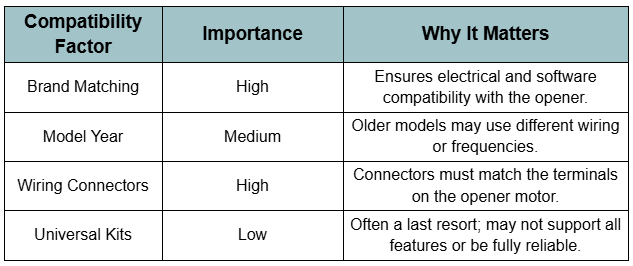
When repairing or replacing a broken garage door sensor, choosing a compatible model is essential. While some “universal” sensor kits exist, most commercial garage door and residential systems require sensors explicitly designed for their opener brand. A mismatched sensor may fail to communicate correctly with the opener’s logic board, resulting in unreliable performance or complete malfunction.
The most dependable approach is to choose replacement sensors made by the same manufacturer as your garage door opener. This ensures accurate communication, steady safety performance, and proper installation.
Before purchasing a replacement, identify the brand and model number of the opener. If this information is unclear, an experienced technician can inspect the system and recommend the correct sensor for your specific needs. This avoids compatibility issues and ensures that your garage door opener operates safely and smoothly.
Common Issues and Troubleshooting Garage Door Sensors
Even a high-quality garage door system can experience issues when a garage door sensor begins malfunctioning. When a sensor is not working correctly, the garage door may refuse to close or may repeatedly reverse during operation. These problems often occur because the detection path is interrupted, the sensor lenses are dirty, or the wiring has become damaged.
Any sensor trouble can affect home security, leaving the garage partially open or unable to close fully. For this reason, a homeowner needs to recognize early signs of malfunction. Understanding what to check helps you troubleshoot the situation and restore safe, dependable garage door performance.
Signs of Malfunction in Garage Door Sensors
There are several clear indicators that your garage door sensor may be experiencing a problem. The most common sign is when the garage door opens normally but will not close, or when it starts closing, hesitates, and reverses even though the path is clear. This pattern usually appears when the sensor is misaligned, the lenses are dirty, or the unit is damaged.
Checking the sensor lights is one of the quickest ways to identify the issue. The LED indicators can reveal alignment problems, wiring concerns, or complete power loss. A broken garage door sensor typically exhibits these symptoms before failing.
Common signs include:
- Blinking Sensor Lights:
A blinking red or green indicator typically indicates that the sensors are misaligned or the detection path is obstructed. - No Lights:
If neither sensor displays an LED light, there may be a power issue, loose wiring, or a damaged connection. - Door Reverses Unexpectedly:
The garage door may begin to close, hesitate, and then reverse as if something entered the path, even when the area is clear.
If one or more of these signs appear, your garage door system may have a damaged or misaligned sensor. Begin by checking the sensor lights, cleaning the lenses, and confirming that the brackets are secure. These steps help determine the following action needed to restore regular operation.
Garage Door Sensor Repair and Replacement
When a garage door sensor stops working, it may need a repair or, in some cases, a full replacement. There are a few simple steps a homeowner can try first, such as cleaning the lenses or checking that both sensors are aligned correctly. These basic adjustments often restore normal function. However, if the issue comes from damaged wiring or the sensor no longer responds at all, the repair becomes more complex. Handling electrical components in a garage door system can be hazardous and requires specialized knowledge.
Selecting new sensors is often the safest and most dependable solution. A trained technician who specializes in garage door services has the right tools and expertise to inspect the opener system, identify the issue, and install replacement sensors correctly. A skilled professional will mount the new sensors, align them accurately, and test the system to confirm that everything works smoothly. If you are dealing with a malfunctioning sensor, contacting a trusted garage door company in Kingston is the best way to restore safety and reliable operation.
What To Know About Replacing a Garage Door Safety Sensor
If replacing a garage door safety sensor becomes necessary, understanding the process can help you decide whether to attempt it or call a professional. The first step is turning off the power to the garage door opener motor. After the power is off, the damaged sensors can be removed from their brackets, and the wiring can be disconnected carefully.
Next comes the installation of the new sensors. The wires must be connected to the correct terminals on the opener. Incorrect wiring can damage the new sensors or interfere with the opener’s logic board. Once the wiring is connected, the sensors must be aligned so the indicator lights stay steady. Solid lights show that the sensors are communicating correctly and the detection path is clear.
Although the steps may seem simple, handling electrical wiring and achieving precise alignment can be difficult. This is why many homeowners opt for professional garage door repair services to replace their sensors. A trained technician will:
- Confirm the opener is powered off before starting
- Strip and connect the wiring properly
- Align the new sensors accurately to support reliable daily performance
This ensures the replacement is completed safely and that your system continues to operate as intended.
Modern garage door sensors play a major role in improving the safety and intelligence of today’s smart homes. These advanced devices provide enhanced protection by integrating with your home’s security network, allowing you to monitor activity, prevent damage to belongings, and maintain secure garage entry. Their ability to connect with alarms, cameras, and mobile alerts demonstrates how essential they are for homeowners seeking dependable security and seamless everyday operation.
At Aloha Garage Doors, our team is dedicated to delivering high-quality solutions that support safer, smarter, and more reliable home systems. Whether you want to upgrade your sensors or explore smart home options, our technicians are ready to assist with expert guidance and precise installation. Contact us or give us a call today to learn how we can help enhance your home’s safety and performance.
Frequently Asked Questions
How do I know if my garage door sensor is malfunctioning?
A malfunctioning garage door sensor often shows clear signs. The garage door may refuse to close, or it may begin closing and then reverse, even when the path is clear. Blinking sensor lights, or lights that will not turn on, can also indicate a damaged or misaligned sensor. Begin by checking the area near the sensors and cleaning the lenses to remove dust or debris.
What steps should I take to troubleshoot a non-functioning garage door sensor?
Start by wiping the sensor lenses gently with a soft cloth. Next, check whether the LED lights on both sensors stay solid and confirm that nothing is blocking the detection path. Inspect the wiring for visible damage or loose connections. If these steps do not solve the issue, contacting a garage door repair technician is recommended.
How do I replace a faulty garage door safety sensor?
To replace a damaged safety sensor, turn off the power to the opener motor. Remove the old sensor units and install the new ones in the exact locations. After the wiring is connected correctly, align the sensors until their indicator lights remain steady. Because electrical wiring and alignment require precision, many homeowners opt for professional repair services to ensure safe and reliable installation.
What are the most common reasons garage door sensors stop working?
Common causes include sensor misalignment, dirty lenses that block the infrared beam, damaged wiring, or power loss. A sensor may also fail due to internal damage. Any of these issues can interrupt the detection path and prevent the garage door from closing correctly.
What are garage door safety sensors, and how do they work?
Garage door safety sensors are required components on all modern garage door openers. They consist of two units that send an invisible infrared beam across the bottom of the doorway. If anything crosses that beam, the opener receives a signal to stop and reverse, helping prevent damaged belongings or an injured household member.
Can dirty or misaligned sensors prevent my garage door from closing?
Yes, dirty lenses can block the infrared beam, and misaligned sensors can stop the units from communicating. In either case, the opener reacts as though something is in the detection path and reverses the door for safety. Cleaning the lenses and realigning the brackets typically resolves the issue.
Are there universal garage door sensors that fit any opener brand?
Some universal sensors exist, but most garage door opener manufacturers design sensors specifically for their own systems. For reliable performance, it’s best to choose a sensor recommended for your opener model. Using an incompatible sensor can lead to malfunction or complete system failure.
How much do replacement garage door sensors typically cost?
Costs vary by brand, sensor type, and whether you purchase the parts yourself or through a technician. Labor fees from repair services may affect the total price. Generally, replacement sensors remain affordable, and professional installation ensures proper alignment and long-term reliability.
What are the benefits of a smart garage door opener?
A smart garage door opener allows you to operate the door remotely through your phone, receive instant alerts, and integrate the system with your home security network. You can also use remote access to allow a trusted guest or delivery technician temporary access to the garage, supporting both convenience and security.
What is the purpose of the garage door sensor?
The primary purpose is safety. The sensor sends an invisible beam across the lower part of the doorway. If anything crosses the beam, the opener stops and reverses the door to prevent damage to property or injury to a household member. This feature is essential for every modern garage door system.