Table of Contents
Modern smart homes rely on connected systems that make life easier, safer, and more efficient, and your garage door is one of the most important parts of that setup. As a major entry point to your home, it needs strong protection and reliable technology. Today’s garage door sensors go far beyond basic safety functions. They provide real-time awareness, improve daily convenience, and help your garage door openers work smoothly with the rest of your smart home devices.
These advanced sensors detect movement, reduce risks, and support automated features that keep your home secure and easier to manage. By understanding how modern garage door sensors work and their importance, you can make more informed choices that enhance both safety and everyday comfort throughout your home. Homeowners often combine these upgrades with garage door repair to keep the system performing reliably.
The Importance of Modern Garage Door Sensors in Today’s Homes
Modern garage door sensors are essential for maintaining home safety and supporting the reliable operation of garage door openers. These sensors ensure the door will not close when an object, household member, or item is detected in its path. A sensor malfunction can leave the garage door partially open, exposing your home to intruders, adverse weather conditions, or damaged belongings. For homeowners, this safety feature is more than a requirement; it is a crucial part of daily protection.
Reliable sensors help confirm that your garage door travels correctly during each cycle, reducing risks and supporting a safer home environment. By maintaining high-quality sensors and addressing sensor issues early, homeowners can keep their residential garage door system dependable, secure, and ready for daily use.
To explore how these technologies elevate both safety and convenience, be sure to read “How Modern Garage Door Sensors Make Your Home Smarter and Safer.”
How Garage Door Safety Sensors Contribute to Smarter Living
A major advantage of smarter living is having technology that responds to your needs while helping keep your home protected. A garage door safety sensor supports this goal by creating an invisible light beam across the bottom of the door opening. If a pet, child, bicycle, or vehicle enters that area, the sensor instructs the opener to stop and reverse immediately.
This simple but effective action helps prevent damaged property and reduces repair costs. Homeowners gain peace of mind knowing the garage door will not close on anything in its path. By regularly inspecting sensors and addressing malfunctions promptly, you maintain a crucial safety feature that protects both the garage and the rest of your home.
If your garage door sensor malfunctions and stops working, this safety feature is compromised. The door might close on something. That is why you should regularly check your garage door sensor and address any issues promptly to ensure the safety of your home. Modern systems support both residential and commercial garage door applications, making them widely beneficial.
For a deeper look at these benefits, check out “The Role of Smart Garage Door Sensors in Building a Safer Home.”
The Connection Between Garage Door Sensor Technology and Home Automation
Modern garage door sensors are designed to integrate with advanced smart home systems, providing homeowners with greater control and awareness. When connected to smart garage door openers, these sensors allow you to check the door’s position, close it remotely, and receive notifications through your phone. This enhanced visibility supports both safety and convenience.
Smart systems can also let delivery drivers or trusted visitors enter the garage without you being home. You can schedule door operation times, track activity, and keep real-time awareness of what happens at one of your home’s main entry points. When integrated with home automation, modern sensors help create a more secure, efficient, and connected living environment.
To learn how this integration enhances whole-home protection, read “How Garage Door Sensors Enhance Smart Home Security Systems.”
Robust research on IoT-based home systems, as published in ScienceDirect, underscores how sensor technologies enable smarter and safer living.
Key Features to Look for in Modern Garage Door Sensors
When planning a garage door sensor replacement or selecting a new sensor for your system, it helps to understand which features matter most. A high-quality sensor should have a strong, stable infrared beam that remains reliable even when exposed to sunlight, a common issue that causes certain systems to malfunction. Choose a model built with durable housing and high-quality lenses so it can operate effectively in a garage environment exposed to dust, moisture, and regular activity.
These upgrades help your garage door system maintain consistent performance and support a safer home. Advanced sensors also integrate more easily with your opener and other smart devices, giving homeowners better reliability and smoother operation.
Advanced detection methods, including ultrasonic sensors, are under investigation; see the AIP Publishing study on automated garage-door control for more details.
Advanced Detection Capabilities for Garage Door Safety Sensors
Modern garage door safety sensors are designed with advanced technology that enables them to perform effectively in a wide range of conditions. Older models often struggled with sunlight, dust, or minor alignment shifts. Today’s sensors address these issues with updated features that enhance accuracy and stability, providing homeowners with greater confidence in their daily garage door use.
When selecting a replacement sensor, choose kits that include the following upgrades:
- Sunlight Resistance: Filters on the sensor lenses help block interference from direct sunlight, keeping the infrared beam clear.
- Improved Alignment Indicators: Bright, easy-to-read LED lights enable homeowners to check alignment during installation or troubleshooting quickly.
- Self-Diagnostic Functions: Some sensors communicate error codes to the opener, making it easier to identify issues such as wiring concerns or misalignment.
- Durable, Weather-Resistant Casings: Reinforced outer housings protect the sensors from rain, vibration, and accidental bumps, helping them last longer.
Choosing sensors with these advanced features strengthens your garage door safety system. Regularly checking alignment and keeping the sensor lenses clean ensures the system performs smoothly and supports a safer home.
Integration with Smart Home Security Systems
Pairing modern garage door sensors with a smart home security system highlights their full value. Once connected, the garage door becomes more than an entry point—it becomes an active layer of home protection. When the sensor detects an interruption in its beam, it can trigger more than just a safety reversal.
Through smart home integration, your system can:
- Activate security cameras
- Turn on exterior lighting
- Send instant alerts to your smartphone
- Sync with alarms or motion-based systems
This provides fast, real-time awareness of what is happening near your garage door, whether you are home, at work, or traveling. When sensors, cameras, and lighting work together, your garage door openers enhance your home’s overall security.
Although some homeowners may feel confident setting these systems up, professional installation is the better choice. A trained technician ensures the sensors are aligned correctly, appropriately integrated with other devices, and tested for reliable daily performance. This guarantees smooth operation without the guesswork.
Common Garage Door Sensor Issues and Solutions
Even a high-quality garage door system can experience problems, especially when a sensor is malfunctioning. If your garage door will not close, a misaligned sensor, dirty lens, or damaged wiring may be the reason. When any of these issues disrupt the infrared beam, the safety feature activates and stops the garage door from closing to avoid damaged belongings or potential hazards.
Identifying the cause is the first step. However, restoring dependable performance often requires assistance from a trained technician. When a sensor is not working correctly, contacting garage door repair services ensures accurate troubleshooting, safe handling of electrical parts, and proper system testing. This helps your garage door operate smoothly again while keeping your home secure.
Identifying Faulty Garage Door Sensor Problems
Recognizing early signs of a faulty sensor can prevent bigger issues later. One of the most common symptoms is when the garage door begins to close but quickly reverses without anything in its path. Another indicator is inconsistent or inactive LED lights on the sensor units. These signals help show whether the sensors are misaligned, obstructed, or not receiving power.
A broken garage door sensor may also display visible wear. Clouded or scratched lenses, bent brackets, or frayed wiring can interrupt communication between the sensors. Detecting these issues early supports faster and more effective garage door sensor repair, reducing the risk of further system problems.
Below is a helpful overview of the most common garage door sensor problems and what each one typically indicates:
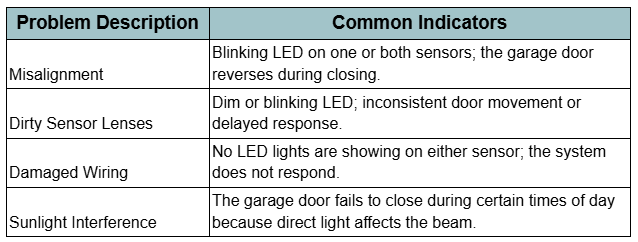
Troubleshooting LED Indicators and Sensor Alignment
If you suspect an issue with a garage door sensor, start by checking the LED indicators. One sensor typically has a green light that sends the infrared beam, while the other has a red light that receives it. When both lights remain solid, the alignment is correct. If either light flickers or turns off, it typically indicates a malfunction that requires attention.
These LED indicators can help you identify the problem before calling a technician. A blinking red light almost always indicates misalignment, meaning the sensors are not facing each other correctly and the infrared beam is being interrupted. When this happens, the garage door will not operate as expected.
A trained professional may perform the following steps when troubleshooting your system:
- Check for Obstructions: Inspect the space between the sensor lenses to ensure nothing is blocking the infrared beam.
- Clean the Sensor Lenses: Gently remove dust or grime using a soft, dry cloth to clear the detection path.
- Verify Alignment: The sensors must face each other directly. A technician may adjust the brackets until both LED lights remain solid.
- Inspect Power and Wiring: Confirm that the sensors are receiving power and examine the wiring for loose connections or signs of damage.
Sharing these details with a professional can help speed up the repair process. These steps help diagnose most garage door sensor issues and restore safe, consistent operation.
Modern garage door sensors have become an essential part of smarter living, offering safety, convenience, and dependable performance for today’s connected homes. These advanced devices do more than detect obstacles; they support seamless home automation, enhance real-time monitoring, and help your garage door openers function with greater accuracy and efficiency. By integrating modern sensors into your system, you create a safer environment, improve daily routines, and strengthen protection at one of your home’s most frequently used entry points.
Understanding how garage door sensors work, recognizing early signs of malfunction, and choosing high-quality replacements are key steps toward maintaining a secure and efficient home. With the right technology in place, your garage door becomes a smart, reliable part of your overall security network.
If you are considering new garage door sensors, upgrading your system, or need guidance from a trusted local expert, Aloha Garage Doors is here to assist. Our team provides dependable service, professional support, and expert installation to keep your home safer and smarter. Contact us today or give us a call for reliable solutions and personalized assistance.
Frequently Asked Questions
What steps should I take if my garage door won’t close due to sensor issues?
Start by checking the area around the sensors to make sure nothing is blocking them. Wipe each sensor lens with a clean, dry cloth to remove dust or debris. Then, confirm the sensors are aligned correctly and see if the LED lights remain solid. If your garage door still malfunctions after taking these steps, your best option is to contact a garage door repair service. A trained technician can diagnose the issue safely and restore proper function.
Can I install or replace a garage door safety sensor myself?
Some homeowners attempt DIY installation, but professional installation is the safer and more reliable choice. A technician ensures proper wiring, accurately aligns the sensors with your garage door opener, and tests the system to ensure safe operation. This guarantees that your garage door services are completed correctly and securely.
How do I replace a faulty garage door sensor?
Replacing a faulty sensor requires turning off the power first, removing the old sensor, and installing the new unit in the correct position. The wiring must be connected properly, and the sensors must be aligned so the infrared beam stays clear. Because garage door sensor replacement involves electrical components and precise positioning, it’s best handled by a garage door repair service professional for safe and accurate results.
What are the most common reasons garage door sensors stop working?
The most common causes include sensor misalignment, dirty lenses, and damaged wiring. Sensors may shift if bumped, and dust or debris can block the beam. Over time, wiring may wear out or become damaged, sometimes even by pests. All of these issues can interfere with the normal operation of the sensor.
How can I troubleshoot a garage door sensor with a flickering or off LED light?
A flickering LED often means the sensor is dirty or misaligned. Clean the lenses, then adjust the sensor until the light remains steady. If the LED is completely off, there may be a power issue or damaged wiring. When basic troubleshooting does not resolve the problem, it’s best to have a professional inspect your garage door system.
How do safety sensors for garage doors help prevent accidents?
Safety sensors project an invisible light beam across the garage door opening. When a person, pet, or object breaks this beam while the door is closing, the garage door openers reverse immediately. This essential safety feature helps prevent injuries and property damage for all users of residential garage door openers.
What features should I consider when selecting a replacement garage door sensor?
Choose a sensor equipped with an intense infrared beam, sunlight-resistant lenses, and a durable housing. Bright LED indicators make alignment easier. These features improve performance, reduce malfunctions, and help your garage door system last longer.
Are garage door sensors necessary?
Yes, garage door sensors are required on all new garage doors because they protect homeowners, pets, and belongings from injury or damage. If your sensor develops a malfunction, it’s essential to seek professional garage door services promptly to ensure the safety of your system.
What are the benefits of a smart garage door opener?
A smart garage door opener allows you to open or close the door from your phone, receive instant alerts, and integrate the system with your smart home devices. You can schedule operation times, grant temporary access to trusted visitors, and maintain real-time awareness of your garage, boosting both convenience and safety.
Why is my garage door not closing, even though the sensor appears to be functioning correctly?
Even if the sensor appears normal, issues like slight misalignment, dirty lenses, internal damage, or sunlight interference may still prevent the door from closing. The best way to identify the exact cause is to have a professional inspect the system and determine the solution.
Start by checking the area around the sensors to make sure nothing is blocking them. Wipe each sensor lens with a clean, dry cloth to remove dust or debris. Then, confirm the sensors are aligned correctly and see if the LED lights remain solid. If your garage door still malfunctions after taking these steps, your best option is to contact a garage door repair service. A trained technician can diagnose the issue safely and restore proper function.
Some homeowners attempt DIY installation, but professional installation is the safer and more reliable choice. A technician ensures proper wiring, accurately aligns the sensors with your garage door opener, and tests the system to ensure safe operation. This guarantees that your garage door services are completed correctly and securely.
Replacing a faulty sensor requires turning off the power first, removing the old sensor, and installing the new unit in the correct position. The wiring must be connected properly, and the sensors must be aligned so the infrared beam stays clear. Because garage door sensor replacement involves electrical components and precise positioning, it’s best handled by a garage door repair service professional for safe and accurate results.
The most common causes include sensor misalignment, dirty lenses, and damaged wiring. Sensors may shift if bumped, and dust or debris can block the beam. Over time, wiring may wear out or become damaged, sometimes even by pests. All of these issues can interfere with the normal operation of the sensor.
A flickering LED often means the sensor is dirty or misaligned. Clean the lenses, then adjust the sensor until the light remains steady. If the LED is completely off, there may be a power issue or damaged wiring. When basic troubleshooting does not resolve the problem, it’s best to have a professional inspect your garage door system.
Safety sensors project an invisible light beam across the garage door opening. When a person, pet, or object breaks this beam while the door is closing, the garage door openers reverse immediately. This essential safety feature helps prevent injuries and property damage for all users of residential garage door openers.
Choose a sensor equipped with an intense infrared beam, sunlight-resistant lenses, and a durable housing. Bright LED indicators make alignment easier. These features improve performance, reduce malfunctions, and help your garage door system last longer.
Yes, garage door sensors are required on all new garage doors because they protect homeowners, pets, and belongings from injury or damage. If your sensor develops a malfunction, it’s essential to seek professional garage door services promptly to ensure the safety of your system.
A smart garage door opener allows you to open or close the door from your phone, receive instant alerts, and integrate the system with your smart home devices. You can schedule operation times, grant temporary access to trusted visitors, and maintain real-time awareness of your garage, boosting both convenience and safety.
Even if the sensor appears normal, issues like slight misalignment, dirty lenses, internal damage, or sunlight interference may still prevent the door from closing. The best way to identify the exact cause is to have a professional inspect the system and determine the solution.