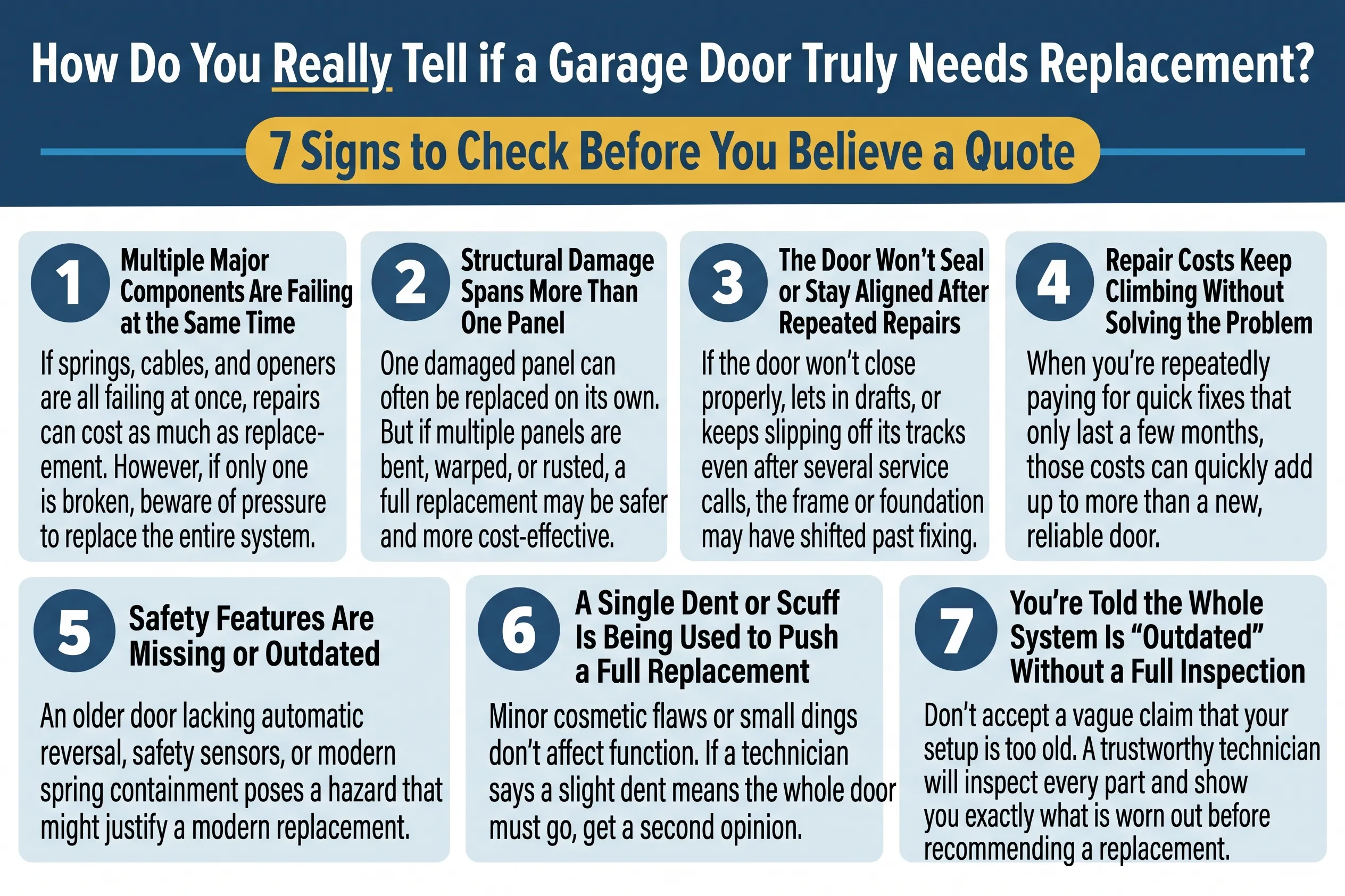
A garage door genuinely needs replacement when multiple major parts fail together, the structure is damaged across more than one panel, the door won’t seal or stay aligned no matter how many times it’s repaired, or repair costs keep climbing without fixing the real problem. A single dent, one rust spot, or a technician telling you the whole system is “outdated” isn’t proof you need a new door. Before you approve any garage door replacement, check the door against the signs below, and get a second read on any quote that pushes for full replacement fast.
Key Takeaways
- Genuine replacement signs involve multiple systems failing together, not one isolated part.
- Cosmetic damage (a dent, a scuff, light surface rust) rarely means the whole door is done.
- A door that’s had 3+ separate repairs in a year, with costs climbing each time, is a real replacement candidate.
- A technician who pushes for replacement without a full inspection, or resists a second opinion, is a red flag, not a diagnosis.
- When in doubt, get a second quote before authorizing anything over a basic repair.
DIY-Safe vs. Call-a-Pro
Situation | DIY-Safe? | Call a Pro |
Cosmetic dent or scuff, door still opens/closes/seals fine | Yes, cosmetic touch-up only | Only if you want a second opinion on a replacement pitch |
Light surface rust, no structural pitting | Yes, clean and treat | If rust has spread to hinges or hardware |
One repair needed, isolated part (sensor, single roller) | Sometimes, for simple parts | If the part is spring, cable, or opener-related |
Multiple components failing together | No | Yes, always |
Damage across more than one panel | No | Yes, always |
Door won’t seal after prior repair | No | Yes, always |
Frayed cables, broken or stretched springs | Never | Yes, immediately (high injury risk) |
Technician recommends full replacement on the spot | No | Yes, get a second opinion first |
1. Multiple Major Components Are Failing at the Same Time
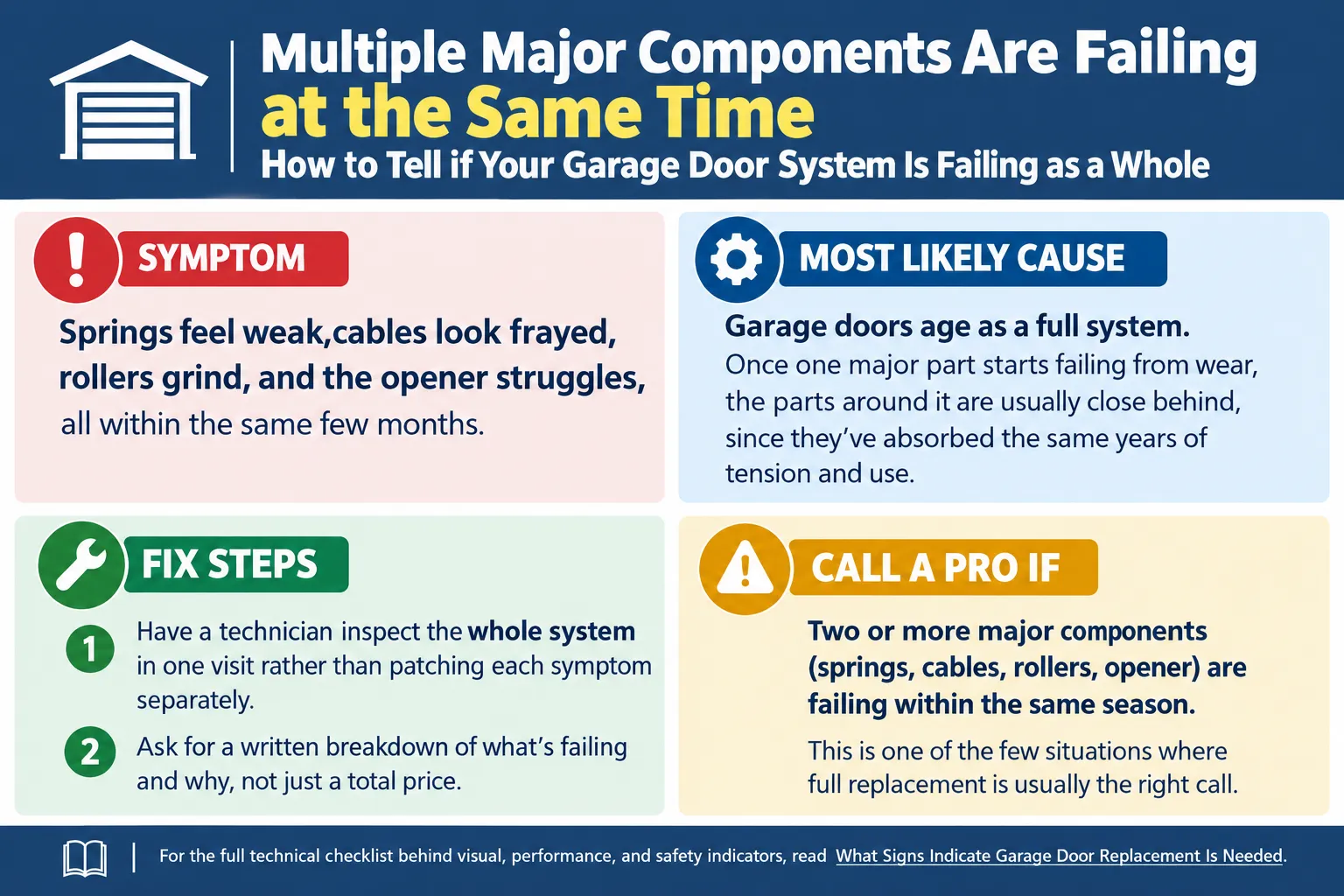
How to Tell if Your Garage Door System Is Failing as a Whole
Symptom: Springs feel weak, cables look frayed, rollers grind, and the opener struggles, all within the same few months.
Most likely cause: Garage doors age as a full system. Once one major part starts failing from wear, the parts around it are usually close behind, since they’ve absorbed the same years of tension and use.
Fix steps: Have a technician inspect the whole system in one visit rather than patching each symptom separately. Ask for a written breakdown of what’s failing and why, not just a total price.
Call a pro if: Two or more major components (springs, cables, rollers, opener) are failing within the same season. This is one of the few situations where full replacement is usually the right call.
For the full technical checklist behind visual, performance, and safety indicators, read What Signs Indicate Garage Door Replacement Is Needed.
2. Structural Damage Spans More Than One Panel
Why a Garage Door With Damage Across Multiple Panels Usually Needs Replacing
Symptom: Warping, cracking, or sagging visible across two or more panels, not just one.
Most likely cause: Once a door’s structure is compromised in multiple places, weight no longer distributes evenly. This puts extra strain on the springs and track, which accelerates failure elsewhere.
Fix steps: A technician should assess whether the damage is isolated (one panel, possibly patchable) or spread across the door’s structure.
Call a pro if: Damage shows on multiple panels, or a single panel’s damage is affecting how the door opens and closes.
3. The Door Won’t Seal or Stay Aligned After Repeated Repairs
How to Fix a Garage Door That Won’t Seal Properly No Matter How Many Times It’s Repaired
Symptom: Persistent gaps at the bottom or sides, or a door that goes crooked again shortly after being realigned.
Most likely cause: Worn tracks, a warped frame, or a door that’s simply outlived its structural tolerances and no longer holds alignment, even after correct repairs.
Fix steps: Confirm the track and frame themselves are sound, since realigning a door with a warped frame is a temporary fix at best.
Call a pro if: The door has been professionally realigned more than once for the same issue and the problem keeps returning.
4. Repair Costs Keep Climbing Without Solving the Problem
Why Rising Repair Costs Often Signal It’s Time to Stop Repairing
Symptom: Each repair costs more than the last, and the door still doesn’t work reliably afterward.
Most likely cause: This pattern usually means repairs are treating symptoms of a bigger, system-wide failure rather than fixing the actual cause.
Fix steps: Ask for a running total of what’s been spent on this door in the past 12 months, and compare it honestly against a replacement quote.
Call a pro if: You’ve had three or more paid repairs in a year and the door still isn’t reliable.
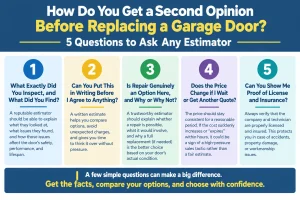
If you want to compare this assessment against another company’s, read How Do You Get a Second Opinion Before Replacing a Garage Door? 5 Questions to Ask Any Estimator.
5. Safety Features Are Missing or Outdated
How to Tell if Your Garage Door’s Safety Features Are Outdated
Symptom: No auto-reverse function, no photo-eye sensors, or an opener with no modern safety cutoff.
Most likely cause: Older doors and openers were built before current safety standards existed, and retrofitting some features isn’t always possible on an old system.
Fix steps: Have a technician confirm whether your current opener and door can be safely upgraded with modern safety hardware, or whether the system predates compatible retrofits.
Call a pro if: Your door has no auto-reverse or sensor protection at all, especially with kids or pets in the home.
6. A Single Dent or Scuff Is Being Used to Push a Full Replacement
Why One Dent Rarely Means You Need a Whole New Garage Door
Symptom: A technician points to one dented or scuffed panel and recommends replacing the entire door.
Most likely cause: In most cases, this is a sales tactic, not a diagnosis. Cosmetic damage to a single panel almost never affects the door’s structural integrity or safety.
Fix steps: Ask directly whether the dent affects how the door opens, closes, or seals. If the answer is no, ask about panel repair or single-panel replacement instead of full-door replacement.
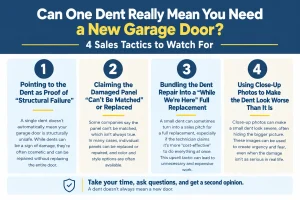
If a single dent is the reason you’re being told to replace the whole door, read Can One Dent Really Mean You Need a New Garage Door? 4 Sales Tactics to Watch For.
Call a pro if: You want a second, independent opinion before agreeing to full replacement over cosmetic damage. That’s always a reasonable ask.
7. You’re Told the Whole System Is “Outdated” Without a Full Inspection
How to Respond When a Technician Says Your Garage Door System Is Outdated
Symptom: A recommendation for full replacement, delivered quickly, without a clear breakdown of which specific parts are failing and why.
Most likely cause: This can be a legitimate call on a genuinely old system, or it can be a pressure tactic that skips the inspection homeowners are entitled to see. The International Door Association has documented recurring patterns of exactly this kind of pressure across the industry, and continues to track and publish reports from both consumers and dealers. The association has also flagged current examples of these tactics in its ongoing industry updates.
Fix steps: Ask for the inspection findings in writing before agreeing to anything. A legitimate recommendation should be able to point to specific failing components, not just an overall impression.
Call a pro if: You want to compare that assessment against a second technician’s. That’s always a reasonable ask, and no honest company should resist it.
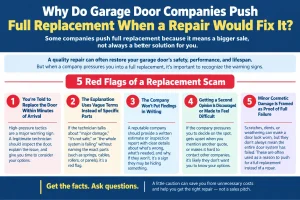
If you think a pushy quote might be more of a sales tactic than an honest diagnosis, read Why Do Garage Door Companies Push Full Replacement When a Repair Would Fix It? 5 Red Flags of a Replacement Scam.
Know the Signs, Skip the Pressure
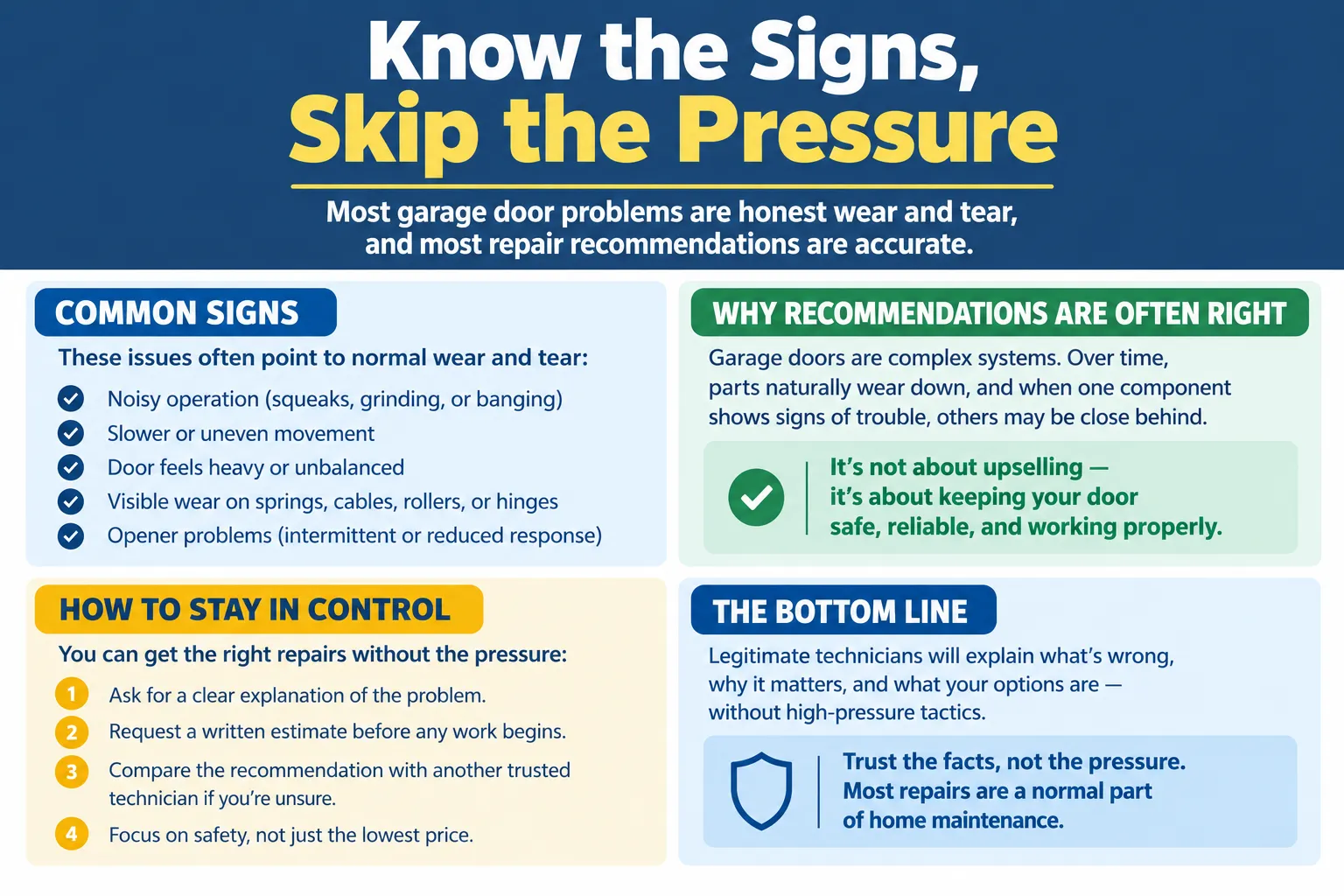
Most garage door problems are honest wear and tear, and most repair recommendations are accurate. But a genuine need for replacement almost always shows up as more than one issue at once, not a single dent or a fast verbal pitch. Knowing the real signs, and knowing what a healthy door can shrug off, protects both your safety and your wallet.
If you’re not sure which category your door falls into, Aloha Garage Doors offers straightforward inspections in Kingston, NH, and the surrounding area, with a clear explanation of what’s actually wrong before any work starts. Contact us or give us a call to book a free inspection or get a second opinion on a quote you’ve already received.