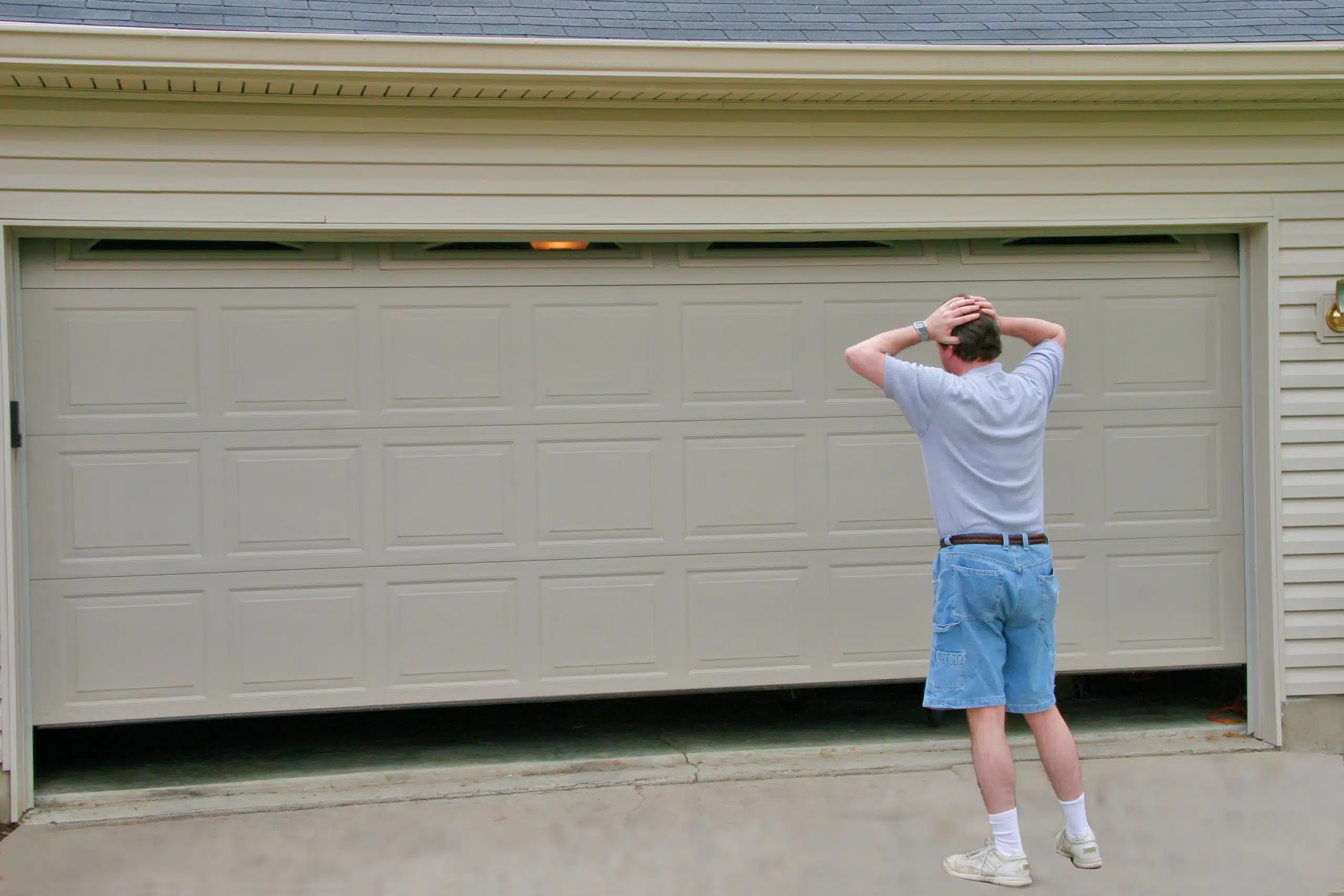
A garage door that bangs hard enough to shake the wall, without the other warning signs of a failing spring, usually comes down to the opener’s settings rather than a mechanical part wearing out. The three most common causes are the close-force setting being too aggressive, the down limit switch letting the door push too far past the floor, and the up limit switch letting it slam into the header at the top of travel.
This is a different issue than a broken or failing spring, which comes with a single, sudden, explosive bang and a door that suddenly feels far heavier to lift. Close-force and limit switch settings are an adjustment rather than a full garage door repair, and they are not the same thing as spring wear.
Key Takeaways
- A hard bang paired with normal, easy manual lifting points away from the springs and toward the opener’s settings.
- A close-force set too high makes the opener drive the door down harder than it needs, banging it against the floor.
- A down limit switch set too far causes the same effect: the opener keeps pushing after the door is seated.
- An up limit switch set too far lets the door bang into the header instead of stopping smoothly.
- None of these three settings are safe to adjust without understanding your opener’s specific adjustment procedure.
- A bang from these causes is a nuisance and wear issue, not usually an immediate emergency, unlike a broken spring.
- Force and limit switch settings should be checked as part of regular garage door maintenance, especially after a new installation.
Spring-Bang vs. Close-Force Bang vs. Limit-Switch Bang
What You Notice | Likely Cause | How Urgent |
One sudden, explosive bang; door now feels much heavier to lift by hand | Broken or failing spring | Stop using the door, call today |
Bang every time at the very bottom of closing, door lifts normally by hand | Close-force setting too high | Adjustment needed, not urgent |
Slight push or bang right as the door seats at the bottom | Down limit switch set too far | Adjustment needed, not urgent |
Bang at the top of opening, near the header | Up limit switch set too far | Adjustment needed, not urgent |
1. Close-Force Setting Too Aggressive
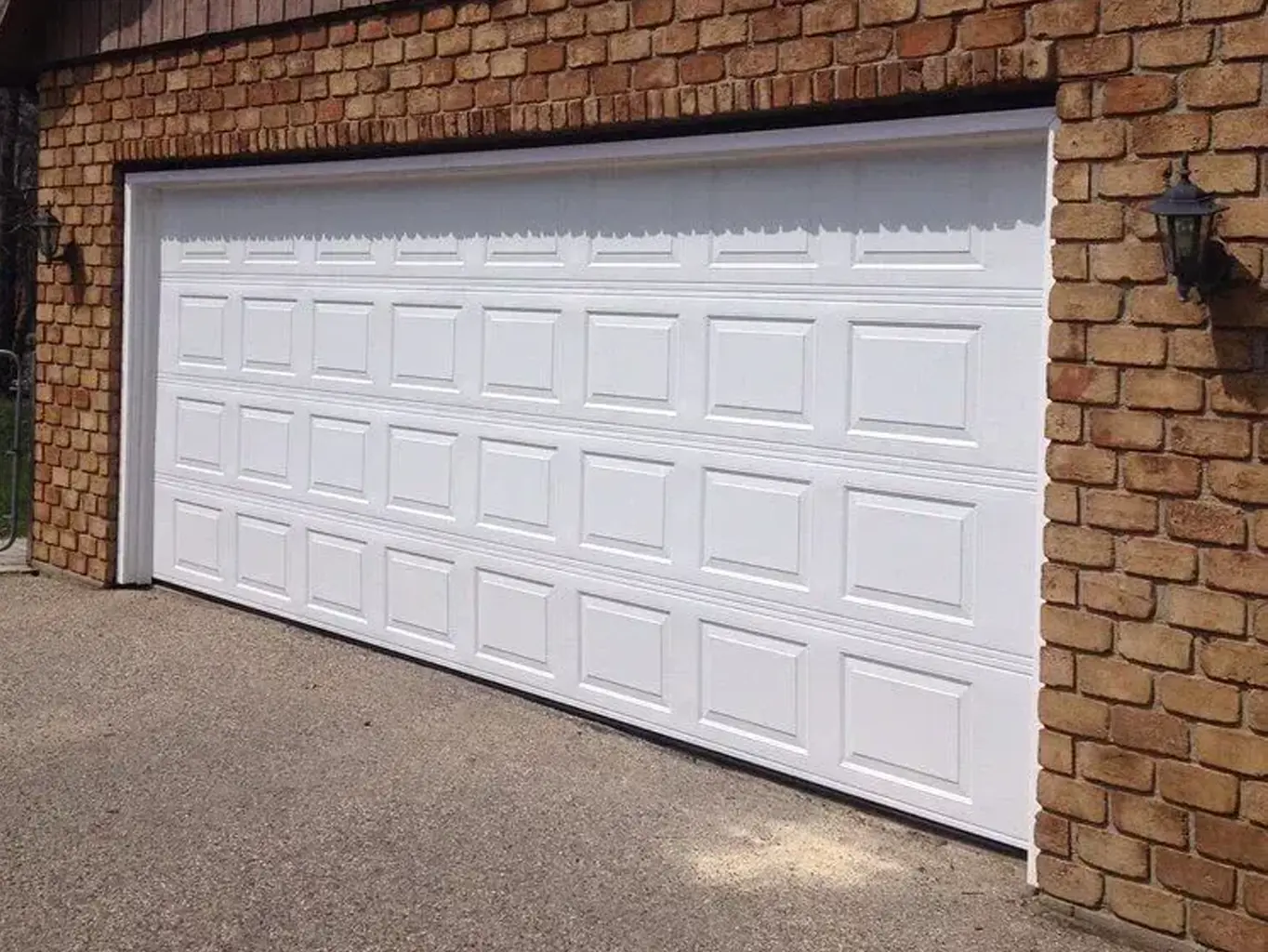
Symptom: The door slams down hard at the very end of closing, every time, with a bang loud enough to shake the surrounding wall.
Most likely cause: Most openers let you set how much force the motor uses to close the door. If that setting is higher than needed, the opener drives it down with excess force instead of easing it shut.
Fix steps:
- Watch a full close cycle and confirm the bang happens at the same point every time, which points to force rather than an obstruction.
- Locate your opener’s force adjustment dial or menu, usually on the motor unit.
- Make small adjustments only, testing after each change, since force settings also affect the safety reversal.
Call a pro if: You’re not confident adjusting force yourself, since too low can cause unexpected reversal, and too high can be a real safety issue if the door doesn’t reverse on an obstruction.
How to Fix a Garage Door Close-Force Setting That’s Too High
Force adjustment directly affects how the safety reversal responds to an obstruction, so this isn’t a setting to guess through. DASMA’s safety guidance for garage door openers recommends leaving force adjustments to a trained technician, since a poorly set force can create a hazardous door rather than just a loud one. Our rule of thumb: if the bang is loud and consistent, check force first.
If your noise doesn’t match this pattern, our guide on Why Is My New Garage Door Making Noise? 6 Causes and What’s Normal covers other causes.
2. Down Limit Switch Set Too Far Past the Floor
Symptom: A bang at the bottom of the door’s travel, sometimes with the door appearing to push slightly into the floor or weatherstripping before stopping.
Most likely cause: The down limit switch tells the opener where the fully closed position is. If it’s set to travel slightly past where the door actually seats, the opener keeps driving the door downward for a moment after it’s already closed, creating a bang.
Fix steps:
- Watch the door’s bottom edge as it closes and check whether it looks like it’s pressing further than it needs to.
- Locate the down limit adjustment, typically a dial or button combination on the motor unit.
- Adjust in small increments and retest, since limit switches interact closely with the force setting.
Call a pro if: Adjusting the limit switch doesn’t resolve it, or you’re unsure which of the two switches (up or down) is causing the issue.
How to Fix a Garage Door Down Limit Switch That’s Set Too Far
This is one of our most common calls after a new opener installation, since default limit settings don’t always match a door’s exact travel distance. A technician can dial in the precise stopping point in a single visit.
If your opener hums or buzzes rather than bangs, our guide on Why Is My Garage Door Opener Buzzing or Humming Instead of Moving? 4 Electrical Causes covers that instead.
3. Up Limit Switch Set Too Far Past Full Open
Symptom: A bang at the top of the door’s travel instead of the bottom, often with a slight shake felt through the header area above the opening.
Most likely cause: The up limit switch works the same way as the down switch, but for the open position. If it’s set to travel too far, the door’s top section bangs into the header, the stop, or the track’s upper limit instead of easing to a stop.
Fix steps:
- Watch a full open cycle and confirm the bang happens right as the door reaches full open, not partway through.
- Locate the up limit adjustment on your opener, usually adjacent to the down limit control.
- Reduce the travel distance in small increments and retest each time.
Call a pro if: The door’s rollers or track show any signs of wear near the top of travel, since repeated banging at that point can accelerate hardware wear over time.
How to Fix a Garage Door Up Limit Switch That’s Set Too Far
In our experience, this cause gets missed more often than the down limit switch, simply because homeowners watch the door close, not open, when diagnosing a bang. If your bang happens on the way up, check this switch specifically.
This is also the fastest way to tell these three settings-based causes apart from a spring problem. UL Standards & Engagement’s overview of automatic garage door safety standards notes that operators are required to include at least two entrapment-protection features working together: an inherent reversal system plus a photo eye or edge sensor, and a close-force setting that’s too aggressive can work against how well that reversal system responds to an obstruction.
If your door has instead been getting progressively noisier over time, or feels heavy to lift manually, see our guides on when to replace your garage door springs and what happens if you ignore a worn garage door spring cover separately.
If what you’re hearing is more of an intermittent click than a bang, read our guide on Why Is My Garage Door Making a Clicking or Ticking Sound? 4 Causes instead.
When a Banging Garage Door Needs an Adjustment, Not a Repair
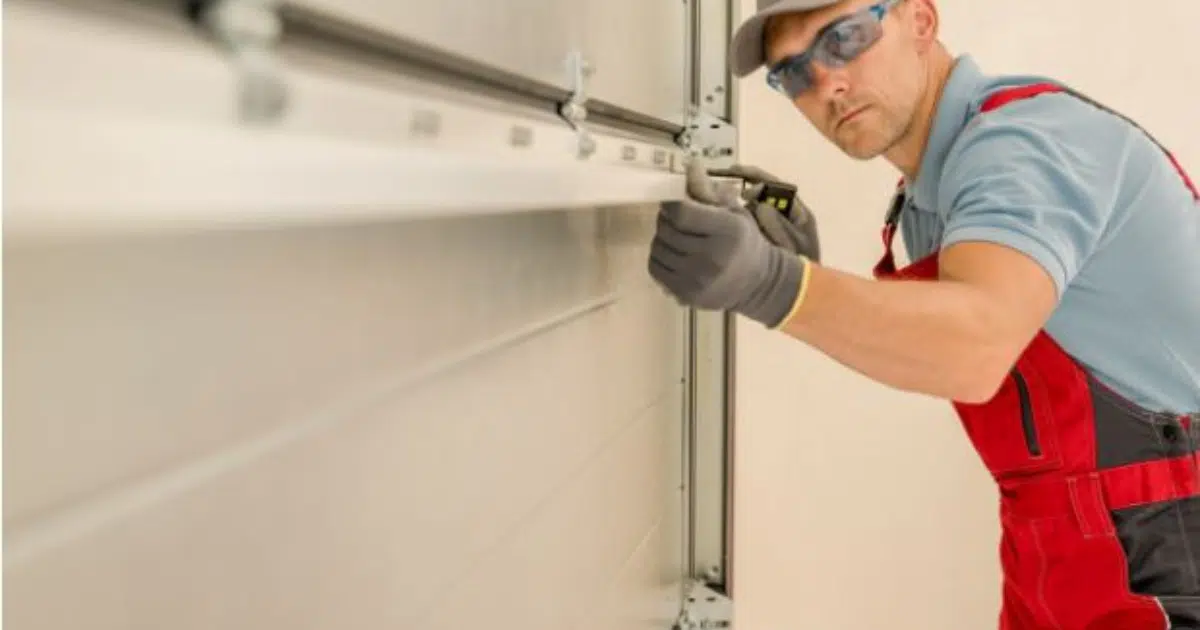
Close-force and limit switch settings are some of the most common reasons a new or recently serviced opener bangs loudly, and none of the three point to a failing part. The bigger risk isn’t the noise; it’s what an incorrect force setting can do to the safety reversal if the door meets an obstruction.
Aloha Garage Doors adjusts opener force and limit settings for homeowners across Kingston, NH. If your door is banging hard enough to shake the wall, contact us today or give us a call to book a service call, and we’ll get the settings dialed in properly.